Thank you to Okaloosa Gas for sponsoring this article!
On June 27, 1940, the United States Department of the Interior officially transferred the land of the Choctawhatchee National Forest to the War Department. The move, which granted 340,000+ acres to the War Department, changed the area’s future forever.
In a generation, the area around the Choctawhatchee Bay went from a rustic, subsistence living, turpentining in the Piney Woods to one that made the space age – and the American Defense Industry – a reality. Billions upon billions of dollars were rerouted from government coffers to the Emerald Shores of Fort Walton Beach, Okaloosa Island, Niceville, and Valparaiso – and a storm of American soldiers, airmen,n and government specialists would move to work in the area – and stay for the rest of their lives.
The land, which had been a preserve of strong, hard wood to make ships for the Navy, was staying in the military production business, just not in a way that anyone who set up the national forest preserve in the 1820s could have predicted.
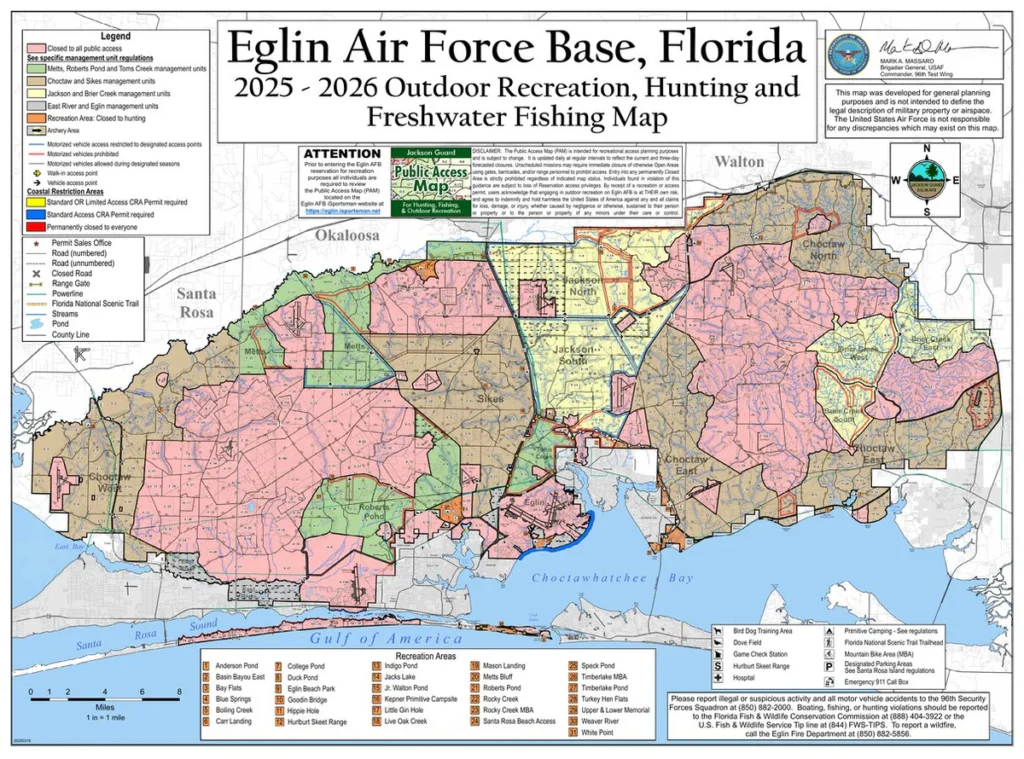
A map of Eglin Air Force Base in 2026
Why did the Interior Department give the Choctawhatchee National Forest to the Department of War in 1940?
War ravaged Europe in 1939. Japan and its soldiers had made quick work of the Chinese and continued to commit atrocities. President Franklin Roosevelt saw the writing on the wall. Japan, in particular, was resource-deprived and desperate for oil. The United States placed an embargo on Japan as retribution for the war crimes committed in Nanking and in other places in China.” “Faced with serious shortages as a result of the embargo, unable to retreat, and convinced that the U.S. officials opposed further negotiations, Japan’s leaders concluded that they had to act swiftly,” an historian with the US State Department wrote in an article. That conclusion would lead to the attack on Pearl Harbor at the end of 1941.
But this attack was not completely unexpected. As the war dragged on, the White House was aware of the embargo’s effect on the Axis belligerents, who had precious few oil deposits within their territory. Roosevelt and his subordinates in the War Department believed war was highly likely – and that they would need to prepare a legion of specialists to fight back against the fascists. Around the country, training centers popped up to train pilots, engineers,s and other specialists, so they would be ready when the time came. Combined with the upscaling of weapons and defense manufacturing in 1940, the Americans sealed the fate of the Axis before the United States’ belligerence officially began (barring military disaster).
Building the Range
In 1940, a small garrison of Army Air Corps personnel was stationed at the idyllic town of Valparaiso. The town recently had, as the kids say today, ‘a come up.’ James Plew, a Chicago-area entrepreneur, had taken over a Depression-era resort idea that wavered fretfully close to bankruptcy when John Perrine, its original owner, died. With his know-how and business sense, Plew quickly turned the game around. In 1937, Plew did something many would think unwise – he donated a bunch of land to the government.
You see, Plew was an aviation enthusiast who owned his own airplane and was quite bullish on the future of aviation as an industry. He also knew that an army base would help pull the small town in the middle of nowhere out of the depression. The future of the military-industrial-research complex as a staple of the local economy was born.
The army gladly accepted Plews’s offer for the land. It was spacious. Few lived in the area. Therefore, it was perfect to practice using and testing weapons. After all, the Army didn’t want a PR disaster stemming from a flyboy shooting the wrong thing or accidentally dropping bombs on a house… or worse.
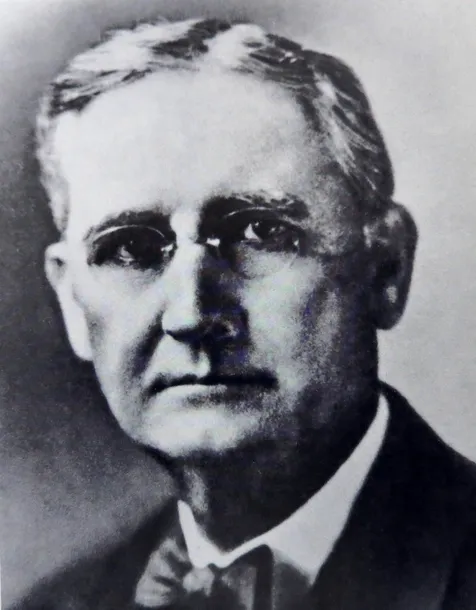
James Plew moved down to the Emerald Coast town of Valparaiso to save a development from going under. What happened next would dramatically alter the sleepy coastal community on the Emerald Coast forever.
Congressman and future Chief Justice of the Florida Supreme Court, Millard Caldwell, called a public hearing to discuss the proposed expansion. The proposal that accompanied the transfer of the forest defied many locals’ wildest dreams. The personnel (which had already grown from 16 to 100) would quintuple. Payroll on base would jump from $2,000 to $40,000. “Such riches were unheard of,” remembered Valparaiso Star Editor and future Congressman Bob Sikes. Almost a century later, the Assistant Secretary of War, Dale Marks, would comment to members of the Niceville-Valparaiso Chamber of Commerce that Northwest Florida is on the front line of America’s industrial “arsenal of freedom.”
Sikes and his newspapers would give full-throated support to the expansion. The plan continued to face opposition by people, as Sikes put it, “Undoubtedly, they are motivated by selfish interests, or by ignorance of the actual conditions which surround the transfer.”
Whether or not that was true, the land changed hands today – 86 years ago.
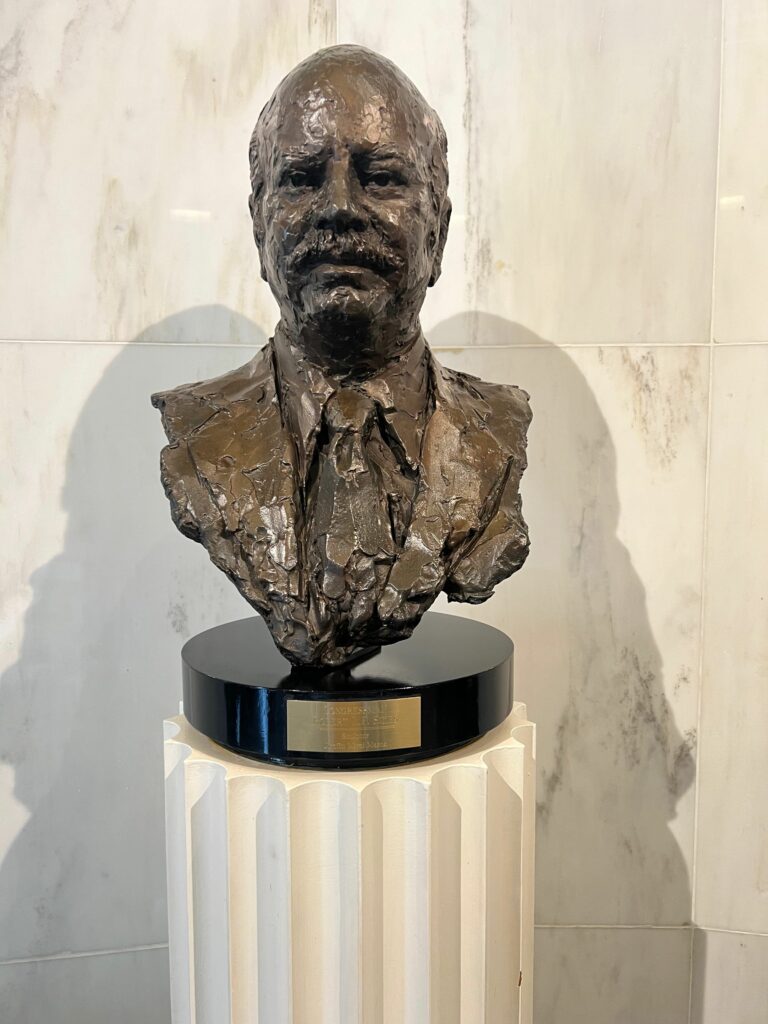
This bust of former Congressman Bob Sikes is on display at the
Northwest Florida State College Robert L.F. Sikes Center in Crestview. On Monday, the college
dedicated a new exhibit of Sikes’ artifacts.
More History of the Emerald Coast, brought to you by the folks at Okaloosa Gas District!