At the same time, Anglo settlers in the Mexican province of Texas just engaged in a revolution to rid themselves of the Mexican government of Santa Ana. Word is that President Jackson would love to get involved in the affairs of the Lone Star Republic as well.
No, the settlers of Lumbertown are on their own.
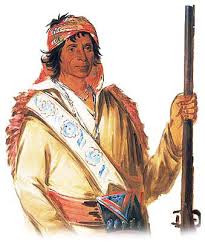
The Creek man heads into the trading post and barters for more ammunition and a couple of sundries the family needs. As he leaves, a man follows him out of the structure. The Native Americans’ eyes take a moment to adjust to the sunlight. When they do, the man sees his fellow Creek corralled by some Angry-looking Anglo settlers. The confrontation quickly escalates, leaving the Creek dead. The Crisis has begun.
Walton and Escambia Counties’ emergency against the Creek would not have had the volume of casualties that the Seminole War had. Still, the terror inflicted on the Americans and the Creek would last until the early 20th Century.
After the death of the Creek trading party at Lumbertown, their kinsmen were incensed by their slaughter and began eye-for-an-eye retaliation. The local Americans were so overmatched that they reached out to the State Government in Tallahassee for help.
In response, Governor Richard Keith Call would dispatch the Jackson County Militia to aid the Walton County and Santa Rosa County residents against the thousands of Creeks living in the area. The 1830 census reported roughly 4,500 residents in what are now the four westernmost counties of Florida.
While the militia was being dispatched, the Creek had free reign of most of the territory in Escambia and Walton County. Their braves would attack remote farms and other outposts to steal provisions and take a couple of scalps as well. By May of 1837, the Creek had killed 12 people in Walton County alone. For reference, to kill the same proportion of people in Walton County today, you would have to end the lives of almost 800 people.
The Walton County militia, formed in May and led by Captain Reubin Barrow, and the Jackson County militia, led by Colonel Leavin Brown, would wage a brutal bush war against the Creek in an attempt to exterminate them all and ethnically cleanse the area of Creek. By the end of July, the Jackson County Militia had successfully cornered large groups of the Creek retinue and won decisive battles. As the August heat smothered the Panhandle, more and more Creeks would come out of the piney woods to surrender to the militia. Most of the small number that remained, about 100 in all, navigated their way to central Florida to join their Seminole cousins and fight the American army to maintain their independence.
By October, Governor Call signed an emergency order to help the western Floridians, who faced the prospect of famine after the hard fighting and destruction brought about by the Crisis. The state would end up providing food and other essentials to the hardy panhandlers to sustain them through the winter.
Still, remnants of the Creek would inhabit the backwoods of the area for the next fifty years. As late as the 1840s, Historian of Walton County J.L. McKinnon, Jr. would write, there was a single group, known as “Old Joe’s Band,” that continued to raid homesteads around the Panhandle. Indeed, a number of men and women living in Northwest Florida’s Panhandle would claim Creek ancestry as late as the early 20th century on a government application for benefits specifically for Native Americans. But, for the most part, they would make themselves as invisible as possible as a way to survive.