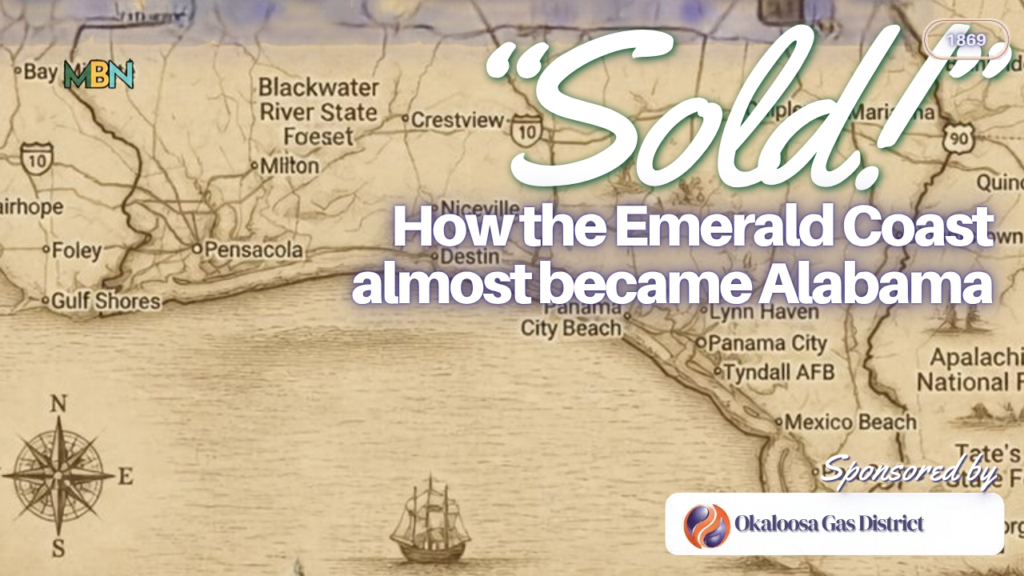

The 1869 Attempt to Annex the Florida Panhandle to Alabama
In the aftermath of the American Civil War, the state of Florida found itself in severe financial distress. Flat broke and heavily burdened by debt owed to investors holding state-backed railroad bonds, state leaders were desperately searching for economic relief. This financial vulnerability reopened a long-standing territorial debate: selling the Western Panhandle, everything west of the Apalachicola River, to the neighboring state of Alabama.
A High-Stakes Financial Offer
In 1869, Alabama seized the opportunity to expand its territory and secure valuable natural resources and ports. The Governor of Alabama dispatched three commissioners to Florida to negotiate a purchase deal. In exchange for the territory—which encompassed approximately 27,000 residents and key port cities including Pensacola, Port St. Joe, and Apalachicola—Alabama offered $1 million in bonds payable over a 30-year period. In 1869 dollars, this sum represented a massive expenditure, equivalent to roughly $24 million today.
Popular Support Among Panhandle Residents
The idea of joining Alabama was widely popular among residents living in the Western Panhandle. Many settlers who had moved to the region from Alabama still maintained strong cultural and personal ties to the “Yellowhammer State”. On November 2, 1869, West Florida voters turned out at the polls to express their preference, approving the measure to leave Florida and join Alabama by a dramatic margin of nearly two-to-one (approximately 1,100 votes in favor to 700 opposed).
Why the Transfer Failed
Despite local support and active negotiations, the transfer ultimately collapsed. Alabama itself was suffering from severe post-war economic strain and could not comfortably assume the extra financial obligation. Recognizing the state’s financial limitations, Alabama Governor William Hugh Smith rejected the transfer, effectively shooting down the deal. Although subsequent purchase attempts were launched in 1870, 1901, and 1921, none proved successful, leaving the Western Panhandle firmly part of Florida.