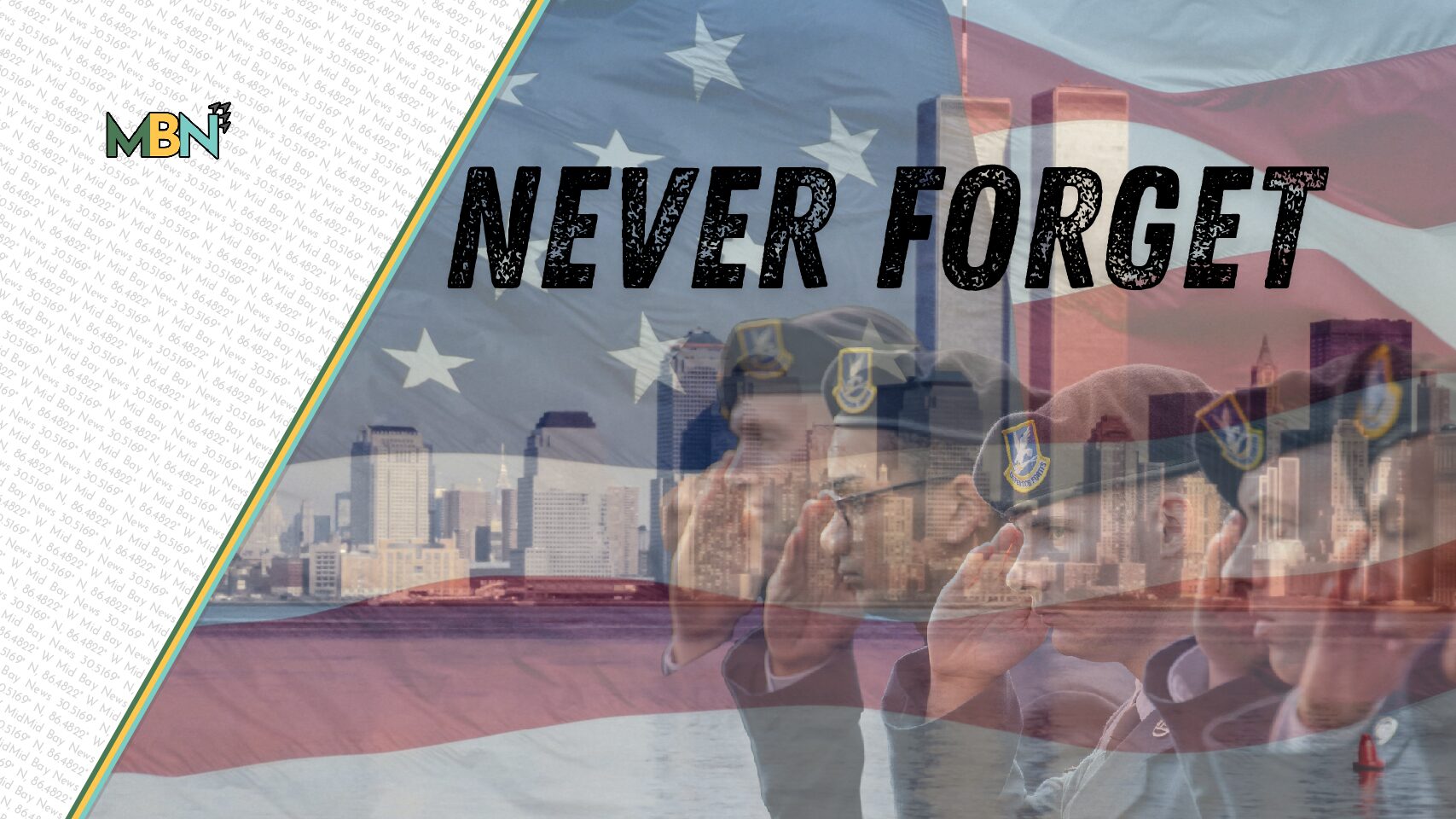

On Sept. 11, 2001, all of America held its breath.
Most in our nation who remember the day can tell you exactly where they were and what they were doing that morning when they learned that American Airlines Flight 11 had crashed into the World Trade Center’s North Tower.
What followed that day changed America forever. The 9/11 terror attacks are regarded as one of our nation’s most horrific tragedies, and we still see its effects today. Thousands of people still struggle with health issues from the toxicity at Ground Zero, the site where the Twin Towers used to stand. Airlines had to tighten travel restrictions to ensure hijackers never slipped through again; and President George W. Bush launched the War on Terror, which left a lasting effect on our U.S. Military.
“The past two decades centered our doctrine, training, and mindset around the Global War on Terror,” Roy Eberle, Forces Operations Manager at Eglin Air Force Base, said. “Today, our challenge is actively pivoting from those counterinsurgency frameworks to rebuilding high-end readiness and revitalizing our military capabilities.”
During 9/11, Eberle was a Security Forces junior enlisted Airman stationed at Andrews Air Force Base in Maryland.
“Watching the Twin Towers collapse on live television and personally seeing smoke rising from the Pentagon across the river while at Andrews, burning a lasting impression,” Eberle said. “The immediate display of American flags all around DC and Maryland was moving, and I felt like the country had come together in our shock at the tragedy.”
For many of today’s Airmen, the firsthand experience of 9/11 is not a shared memory.
“For our younger Airmen, it’s a historical milestone or a chapter in a textbook rather than a lived memory,” Eberle said. “… But new crises arise, the military must evolve and look forward, but we must do so while preserving the operational and tactical lessons forged during the [Global War on Terrorism] era.”
Eberle said personnel at Eglin work hard to ensure Airmen who don’t remember 9/11 still recognize its weight “through discussion of [their] career experiences, both good and bad.”
He has advice for the service members and veterans who remember.
“Lead with your knowledge and values but be receptive to the ideas proposed by the younger generation,” Eberle said. “Effective mentorship is a two-way street— Understanding their worldview helps us translate timeless lessons into a context that resonates with them today.”
The most important lesson, Eberle said, is one that service members and civilians alike should remember above all else:
“Never forget.”