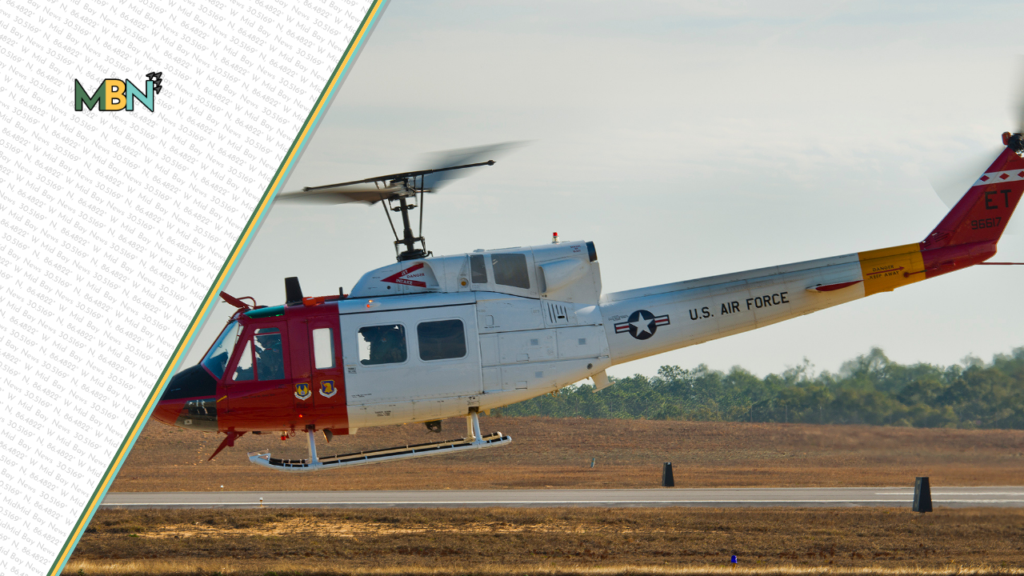

When a patient suffering from a brain aneurysm needed emergency neurosurgery, Airmen from Eglin Air Force Base quickly stepped in to provide a critical link between two hospitals.
On Aug. 5, the 413th Flight Test Squadron and 96th Medical Group accepted a mission from the Air Force Rescue Coordination Center to transport a patient from Ascension Bay Hospital in Panama City to Ascension Sacred Heart Hospital in Pensacola.
The approximately 130-mile medical flight gave the patient access to the specialized care needed for immediate neurosurgery.
For the Eglin Airmen involved, the mission was anything but routine.
“We are the last possible option to get that patient to a higher-level care facility,” said Maj. Richard Burges, a 413th FLTS test pilot who received the initial call.
The 413th FLTS is a flight test unit and is not normally on alert for medical evacuation missions. That meant Airmen across several specialties had to move quickly to get the mission off the ground.
“Every time we’re able to accomplish one, it’s due to the efforts of our maintainers, medics, and flight equipment personnel,” Burges said.
A Race Against the Clock
Once Lt. Col. Dale Hargis, commander of the 413th FLTS, accepted the mission, Burges immediately contacted the 96th Medical Group.
The mission required a physician, registered nurse, and paramedic. Capt. Erik Bjelke, an intensive care nurse, and Staff Sgt. Ramon Gonzalez, a paramedic, had recently completed helicopter training with the 413th FLTS, giving them familiarity with the aircraft.
Dr. Capt. Jonathan Martin, an emergency physician, rounded out the medical team.
The three Airmen quickly gathered the equipment and medications needed to care for the patient during the flight while obtaining medical information from the Panama City hospital.
“There was an immense sense of purpose,” Bjelke said, recalling the rush to prepare for takeoff.
The medical team wasn’t the only group working against the clock.
The UH-1N Huey needed for the mission was at Eglin undergoing a scheduled cleaning, while the 413th FLTS crew and aircraft were based at Duke Field. The approximately 15-mile distance between the two locations added another logistical challenge.
The aircrew, maintainers and flight equipment personnel traveled to Eglin during peak traffic, while maintenance crews extended their workday to prepare the helicopter for the mission.
Maj. Josh Park, a 413th FLTS test pilot, handled the flight planning, calculating fuel requirements, hospital landing procedures and the power requirements for the helicopter during the approximately 250-mile total mission.
“Without his quick and accurate planning, we would not have taken off with enough fuel to transport the patient to Pensacola without having to stop along the way,” Burges said.
Within two hours of the initial call, the helicopter and medical team were airborne.
A Critical Flight
When the Air Force medical team arrived at Ascension Bay Hospital, the patient’s family was there.
“The family was incredibly relieved and appreciative to see the Air Force,” Bjelke said. “It seemed like we were their only hope.”
Once aboard the helicopter, the medical team immediately went to work.
The patient was sedated and required assisted breathing and continuous monitoring. Gonzalez and the flight medical team focused on respiratory support and medical supplies while Bjelke monitored IV pumps and other medical equipment.
With limited space inside the Huey, each member of the medical team had a specific responsibility.
“It truly required close coordination and trust within the team,” Bjelke said.
The flight to Pensacola took approximately 130 miles and went smoothly. But by the time the team arrived at Sacred Heart, fuel and crew-rest considerations were becoming critical.
The Eglin team helped carry the patient’s stretcher from the helicopter into the hospital’s emergency department without waiting for additional assistance.
A security guard who had stopped traffic for the helicopter’s landing saluted the Airmen as they carried the patient inside.
“It was a powerful moment of recognition and respect,” Bjelke said.
Mission Accomplished With Minutes of Fuel Remaining
After delivering the patient for surgery, the UH-1N departed Sacred Heart with only about 10 minutes of fuel remaining.
The crew stopped at Pensacola International Airport to refuel before beginning the trip back to Duke Field.
With the patient safely delivered and in surgery, the team finally had a chance to breathe.
For Park, the mission demonstrated what can happen when military and civilian Airmen with different specialties come together under pressure.
“Flying the UH-1N on this life-saving mission was a profound privilege,” Park said. “For me, the true highlight was watching our 96th TW Airmen, both civilian and military, come together at moment’s notice and uniting their specialized skills to help save a fellow American in need.”
The mission also demonstrated Eglin’s ability to rapidly mobilize personnel and resources for an emergency outside the wing’s normal test mission.
“The seamless collaboration between the 413th FLTS and 96th MDG was instrumental in saving this patient’s life,” said Col. Tara Lovell, 96th MDG commander. “Beyond providing a vital service to our local community, this mission validated our rapid-response and readiness capabilities.”
For the Airmen involved, a mission that began with an unexpected call ended with a patient safely delivered to the care needed — and another example of how Eglin’s people can respond when their community needs them most.


Photo credit: Eglin Air Force Base.