
Artificial intelligence is no longer confined to computer simulations at Eglin Air Force Base.
The Air Force’s Viper Experimentation and Next-gen Operations Model – Autonomy Flying Testbed, better known as VENOM, has officially entered its flight testing phase, marking a significant step toward the future of autonomous military aviation.
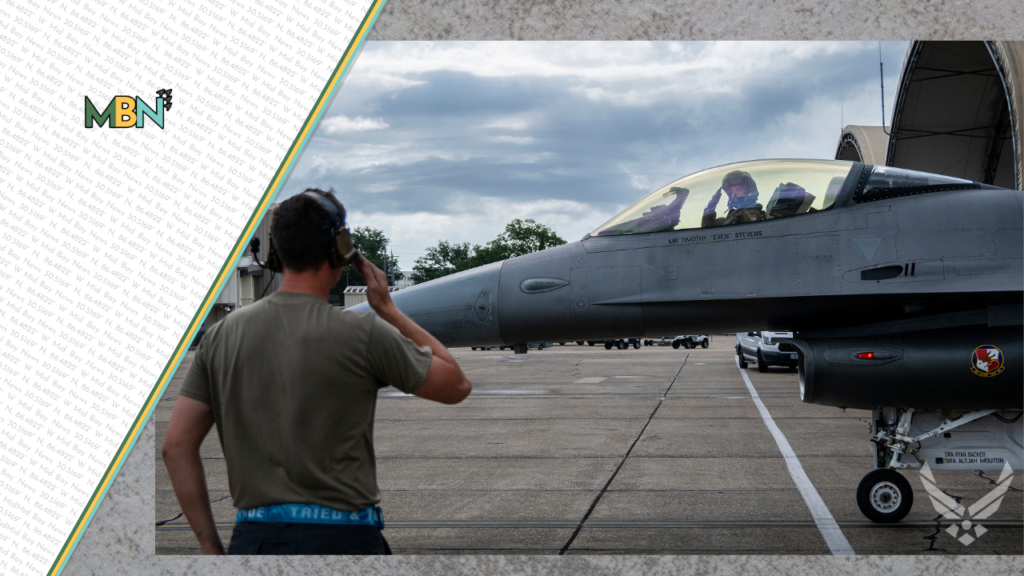
Engineers and test pilots recently completed the program’s first piloted flights in modified F-16 Fighting Falcons equipped with specialized hardware, software, and instrumentation that allow artificial intelligence agents to control the aircraft during portions of flight. Human pilots remain in the cockpit throughout each mission, monitoring the AI and maintaining the ability to take over at any moment.
The modified aircraft first began flying in June to verify that the new systems operated safely following extensive upgrades. By July, the program had progressed to successful in-flight testing in which AI agents autonomously controlled the aircraft while pilots supervised the missions.
“Getting the aircraft into the air is always a monumental milestone for a complex test program,” said Tim Stevens, a VENOM test pilot with the 40th Flight Test Squadron. “It represents years of design, modification, and test planning poured into this project by a dedicated team of hundreds.”
The achievement follows months of ground testing, aircraft system evaluations and thousands of hours of simulation dating back to 2024. Those tests verified the safety of the aircraft modifications, maintenance procedures, and the AI integration before the aircraft ever left the runway.
The VENOM program is a collaborative effort between Eglin’s 96th Test Wing and the Air Force’s 53rd Wing, with support from the Defense Advanced Research Projects Agency (DARPA). Officials say each flight provides valuable data that helps improve both the aircraft and the autonomous software controlling it.
“This VENOM team learns from and finds ways to improve the program with each one of these flights,” said Michael Blaine, VENOM program manager with the 40th Flight Test Squadron. “These continuous improvements ensure the aircraft are prepared, safe, and ready to rapidly advance autonomous flight.”
The program was launched under DARPA’s Air Combat Evolution initiative and will now transition into the Artificial Intelligence Reinforcements (AIR) program. Officials say the modified F-16s will become flying laboratories for testing increasingly advanced AI agents designed to support future crewed and uncrewed combat aircraft operating together.
Defense officials believe the technology developed through VENOM could eventually allow pilots to command teams of autonomous aircraft during future combat operations while accelerating the Air Force’s adoption of artificial intelligence across the battlefield.
Photo Credit: Eglin AFB