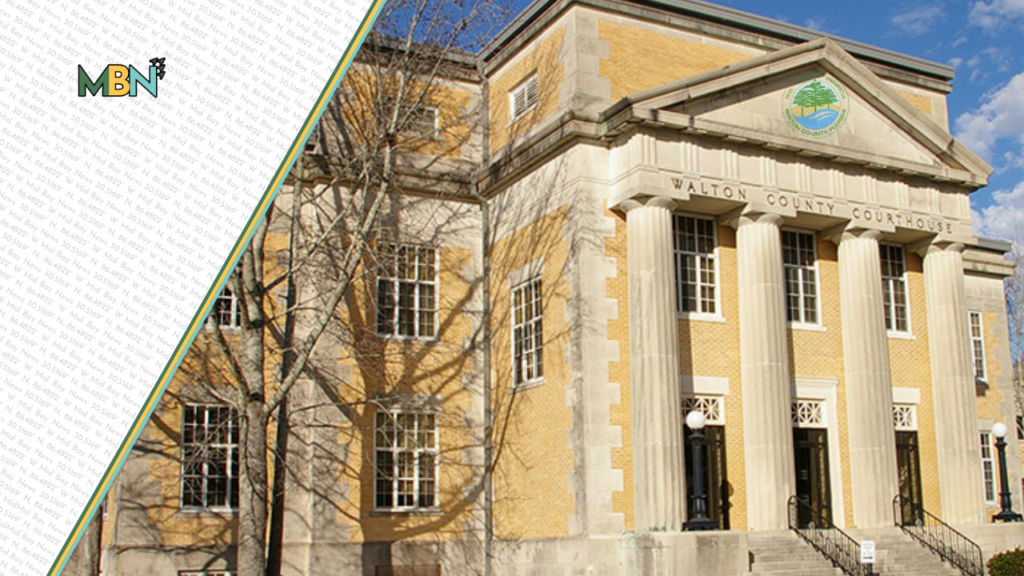

A wrestling match regarding the size of local government and the impending statewide referendum on property taxes has begun to strain the calculators of Walton’s budget staff – and add gray hairs on the heads of the Emerald Coast’s elected officials.
In the vignette, the commissioners brought it up.
- Preparing for financial armageddon for the county if the property tax referendum passes
- Paying department directors and first responders top dollar
- Cutting the budget by 5% from where it was this year
- Hiring more people for the planning department
- Freezing county hiring because the county hired too many people (according to some)
- Spending more money on capital projects and tourism
- Whether or not those department directors should all have use of government vehicles (someone channeled Oprah for this part of the meeting)
- And dealing with a 25% population growth over the last five years.
Suffice it to say, something’s GOTTA give.
The Walton County Board of County Commissioners (BCC) met in Freeport this week for the first of four Budget Workshops to be held throughout the county as it prepares for fiscal year 2027.
Chief Financial Officer Melissa Thomason began the meeting by discussing the budget impacts of new legislation that may allow Floridians who homestead to receive a tax credit. Bottom line, the county staff’s leadership has sent signs through their proposals that they expect a fiscal drought of Biblical proportions after November’s elections – though the value of Walton County property has never been higher.
Two Commissioners AWOL From the BCC Budget Workshop
Commissioners attending the BCC Workshop were Danny Glidewell (District 2), Dan Curry (District 1), and Donna Johns (District 4). Bob Brooke, a resident, commented that it was disappointing that Chairman Brad Drake (District 3) and Tony Anderson (District 5) were absent from the preliminary budget discussion.
Four million bucks, hiring freezes, and hiring sprees “We’re growing government, and that’s not what I’m about.”
With the new “roll back” on Ad Valorem Taxes, the county anticipates a $4 million decrease in revenue. Thomason said that every department has been asked to cut back departmental spending by at least 5 percent. Thomason addressed two significant budget increases. The first is Capital Projects with a proposed increase of $11.5 million, and Tourism with an increase of $7.3 million.
Following the CFO’s overview, Commissioner Curry raised the idea of “freezing new hires” as a first step toward immediate cost savings. He focused on the increasing number of County employees and the expense of both payroll and benefits packages for Walton County.
Curry reported that in 2023, the county had approximately 548 employees. In 2026, the number jumped to 667 employees. He calculated that this equates to an average of 40 new employees per year, with an increase in payroll [excluding benefits] of $8.5 million over three years. Curry said, “So to me, it looks like we’re growing government and that’s not what I’m about. He added, “It seems like we just want to throw money and employees at anything that we see fit, and that is not what I’m about.” Commissioner Curry concurred that only a few departments are looking to increase the number of employees (FTEs), and he believes a hiring freeze should be the county’s practice until the November election is complete and the votes are counted. He added that his perception of staffing in Walton County is that “we are bloated.”
Commissioners’ Perspectives on Budgeting are Divided
Donna Johns did not support Curry’s request for a hiring freeze because, according to her, some departments are understaffed.
“I know that [the] Planning [Department] is an extremely busy office, and they need to hire some people in that office,” Johns told Curry and Glidewell, “We have got to get our Land Development Code and Comp.[Comprehensive] Plan in order. We’ve got to be prepared to start taking in the mobility fees,” Johns said in reference to fees that allow governments to levy a one-time tax on developers to allay the costs of infrastructure improvements to manage the influx of residents to an area created by large developments.
Additionally, Johns argued that Walton County needs to increase staffing for the department that oversees short-term rentals. She added, “We have more short-term rentals coming on board all the time – so the whole system is growing.”
Johns reflected on the request that Thomason, the CFO, made for each department to do the best they could to buckle down and reduce their budgets by five percent.
Curry continued to press for budget cuts where possible. He came back again and said, “You’ve got to make yourself lean, because we’ve been in this predicament for years and years and years.” He continued, “Obviously, by the numbers, [referring to the new hires recorded over the most recent years] we just hire, hire, hire.”
The discussion continued between the commissioners, and Johns supported the argument that with growth (referring to Walton County, Freeport, and DeFuniak Springs), personnel resources will be essential. Danny Glidewell supported the remarks of Commissioner Johns and spoke about the many years (10 years according to Glidewell) in recent history when Walton County didn’t increase staff, and pay raises were not given. Glidewell stated, “In the last seven [or] eight years, when things turned better, we had some catching up to do.” He expressed the “double-digit” growth [in population] seen in Walton County. He estimated that Walton County has 98,000 residents and had only 72,000 six years ago, when the census was completed. Glidewell commented that “the Sheriff’s Office has turned in a flat budget [requesting no financial increase] for the last two years despite growth. I think they’re to be commended for that.”
Glidewell argued for paying competitive rates to first responders, planning directors, architects, and engineers. He added, “It’s easy to say we want the best, but if you want the best, you gotta pay them.” Glidewell summarized his comments, praising Thomason for working to cut the annual budget, given the anticipated loss from the decrease in homestead property taxes. Glidewell referred to the proposed budget as ” a responsible budget.” He added, “Now, I’m not crazy about cutting the capital money, because we need roads, we need parks, we need bridges, but if we’ve got to cut, I’d rather cut capital improvements rather than cut fire trucks and ambulances and roads and stuff like that.”
Curry calls for Better “Efficiency” in Managing Taxpayer Money.
Curry summarized the importance of managing departments with financial integrity, but he emphasized the need for efficiency. One way that he believes the County can improve spending and maximize resources is by applying the findings of the most recent departmental operational audits. He gave an example that before every BCC meeting, all “directors and their staff travel around to each commissioner’s office to talk about their agenda items.” He estimates that this takes from one to three hours and emphasizes that the cost of driving company vehicles and taking personnel away from other responsibilities is not in the best interests of the taxpayer. He added that he believes the county personnel are not carpooling to these meetings, either inferring that this is not the best use of resources – time and money, not to mention the wear and tear on the County fleet. He said this same process happens at the BCC meetings and again afterward, as needed, to prepare responses or take action. BCC meetings are held twice monthly, so it appears that a great deal of time is spent preparing for or responding to them. Curry added, “It’s like the Oprah Show here. Everybody gets a car, you get a car [referring to Directors], you get a car, and you get a car. So you want to talk about efficiencies? Curry added, “I don’t know if everybody knows it, but they’ve invented a phone and a lot of these people can call – you can do a Zoom [meeting].”
Resident Calls the Commissioners to Establish Priorities for County Business – Without Priorities, A Budget is Mission Impossible
At the end of the Commissioners’ discussion, Bob Brooke approached the podium and looked at the Commissioners and said, “You’ve probably heard me say this for 17 or 18 years, I guess. When it comes to budgets and spending, I still don’t see what your priorities are. I’m disappointed that two of them [Drake and Anderson] aren’t even here talking about priorities for the county and priorities in spending your money, and without that, I don’t think you’ve got a budget that makes sense. Following Brooke’s remarks, Johns and Glidewell responded with their personal priorities for the County, and Glidewell focused more on three areas that he believed the County should provide for its citizens. Curry responded to Brooke, saying, “You’re right, plain and simple. I don’t have excuses. I’m not going to sit here and give you word salad. You’re right. [As a Commissioner], I haven’t seen a priority list yet. I’ve seen simple steps toward strategic planning. I’ve seen some steps toward backfilling a budget, which I don’t agree with, but you’re right. I’m not going to say anything else, but you’re right.”