

A special thanks to Okaloosa Gas for sponsoring this article.
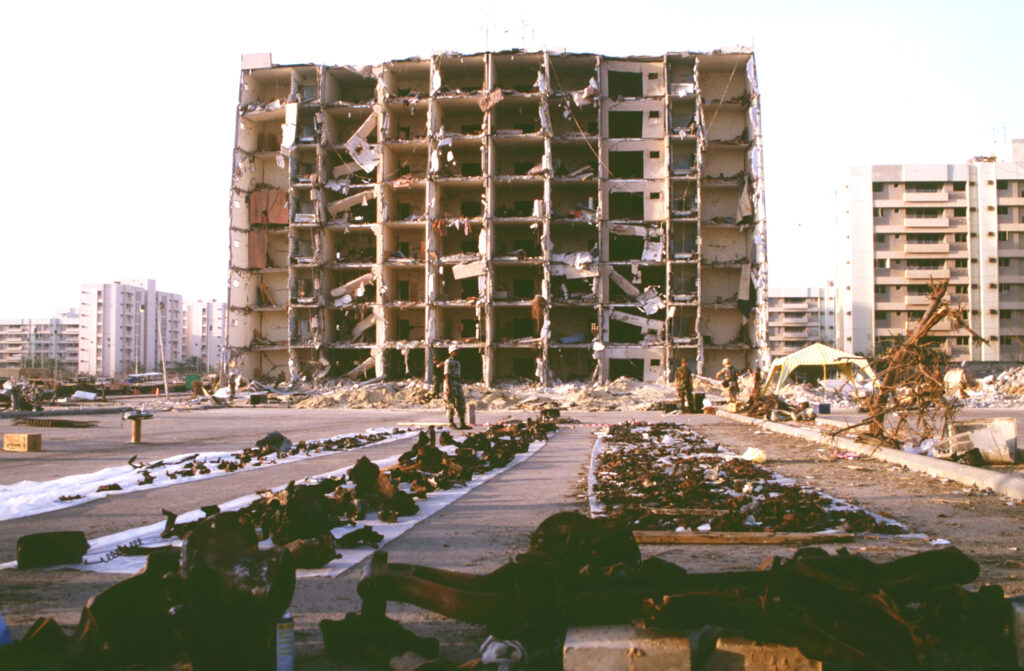
30 years ago today – A group of men aligned with the militant Shi’a Islamic movement Hezbollah al-Hejaz detonated a truck bomb with an estimated 2,000 pounds of explosives near the Khobar Towers living facilities for United States military personnel in Saudi Arabia at the King Abdul Aziz Air Base near Dhahran in eastern Saudi Arabia.
The bomb, which exploded at 9:55 PM local time, killed 19 United States personnel, including 12 from Eglin Air Force Base’s 33 Fighter Squadron, in the explosion. Hundreds more were injured in the attack, which took place as the facility prepared to bed down for the evening. A total of 105 Purple Hearts, medals awarded to military personnel wounded in battle, were awarded to Airmen as a result of the attack. The airmen were at the base to support the fighter jets enforcing a no-fly zone over northern Iraq, ostensibly to protect the Kurdish people who lived there from retribution by the Saddam Hussein regime in Baghdad.
Initially, because of the communications challenges of the 1990s, few had cell phones or any form of electronic communication, and the cost of placing a call across the world was exorbitantly high, so reporting in American newspapers would focus on the families of service personnel stationed overseas. The father of Chuck Rodgers, an airman from the Dallas-Fort Worth Metroplex, would tell the paper that the force of the explosion blew his son back. Sergeant Tyler Christie of Fort Walton Beach would tell the Associated Press that “a few buildings were destroyed.”
Reports from newspapers like the Honolulu Advertiser on the same date (thanks to the significant time difference between Saudi Arabia and Hawai’i) noted that “Some buildings housing American service members have been damaged, and there are some U.S. casualties.” The initial reports were nebulous.
More and more information would pour into the American press’s pages as the month wore on. The President dispatched the FBI to the scene the day after the bombing to determine exactly what happened and who was responsible.
On the 27th, the officer in charge of Eglin Air Force Base, Major General Stewart Cranston, would put a statement out to the press that told the world the base was in the middle of “an extremely difficult time for all involved,” and that “Eglin is a very close community and our hearts go out to all of the family members of our people.” They would also announce the first death toll from the attack – five airmen. The number would more than double over the next couple of days.
Planning
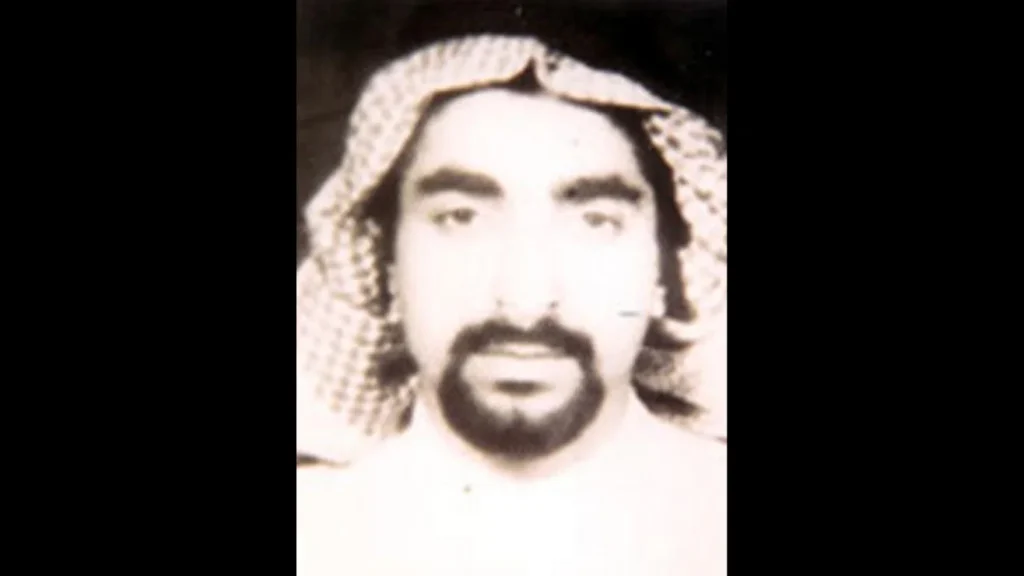
Initial planning for the bombing took place as early as 1993, according to a report from the Washington Institute’s Matthew Levitt. The leader of the attack, Ahmed al-Mughassil, had ordered members of his group to begin the surveillance of the American bases in Saudi Arabia. His goal, according to the United States’ intelligence reports, was to “drive the United States from the region.” The U.S. Indictment against al-Mughassil noted the American government’s belief that he had direct financial and training support from the Iranian government.
After the initial reconnaissance, the group then undertook a dry run to transport explosives to carry out the attack from their stronghold among Lebanese Hezbollah (a similar Shi’ite terror group) through several countries to Saudi. It worked; they weren’t caught and were able to move forward.
When the group tried to move the actual bomb through the border checkpoint between Jordan and Saudi Arabia, Saudi border guards found the explosive, arrested the driver, and quickly rolled up the rest of the gang in the plot, save al-Mughassil.
Instead of dropping the plot, al-Mughassil acquired a fake passport and traveled to Saudi Arabia under the pretense of a pilgrim on Hajj. Once in the country, he assembled a new team to carry out the mission and began to prepare for the attack.
American Dead:
Captain Christopher Adams
Staff Sergeant Daniel Cafourek
Sergeant Millard Campbell
Senior Airman Earl Cartrette, Jr.
Technical Sergeant Patrick Fennig
Captain Leland Haun
Master Sergeant Michael Heiser
Staff Sergeant Ronald King
Master Sergeant Kendall Kitson, Jr.
Airman First Class Christopher Lester
Airman First Class Brent Marthaler
Airman First Class Brian McVeigh
Airman First Class Peter Morgera
Technical Sergeant Thanh Nguyen
Airman First Class Joseph Rimkus
Senior Airman Jeremy Taylor
Airman First Class Justin Wood
Airman First Class Joshua Woody.
The Aftermath
By January 4, 1997, the unit that suffered the most casualties, Eglin Air Force Base’s 33rd Fighter Wing, had been sent back to Saudi Arabia to continue the mission to enforce the no-fly zone against the Iraqis. This time, though, they operated from Prince Sultan Air Base in Al Kharj.
The death of the 19 airmen in the attack would have consequences for their commanders. The Naples Daily News would report that Brigadier General Terryl Schwalier’s promotion was held up as a result of the bombing. The Daily News noted that the promotion had previously been approved by the United States’s Senate before the bombing took place in Saudi Arabia. They added that the hold-up was caused by “An internal Air Force study which has not been formally approved had absolved Schwaller of major blame in the incident. A separate task force probe headed by a retired army general criticized Schwaller harshly, saying he had not paid enough attention to security before the June 25 bombing.”
He would never get his second star.
On January 26, 1997, the opening of the memorial to those who died in the Khobar Towers attack would open on Eglin Air Force Base, with the lighting of an eternal flame that continues to flicker today on the base.
It wouldn’t be until 2001 that a group of 13 Saudi and Lebanese nationals would be indicted for the truck bombing. None of the 13 have been tried or convicted in an American court. In 2015, Ahmed al-Mughassil was arrested in a raid inside Lebanon and extradited to Saudi Arabia for trial. His legal status is “not publicized” according to his profile on the FBI’s website. Most of the other conspirators were arrested by the Saudi Government immediately after the attack. Their statuses are not known, either.