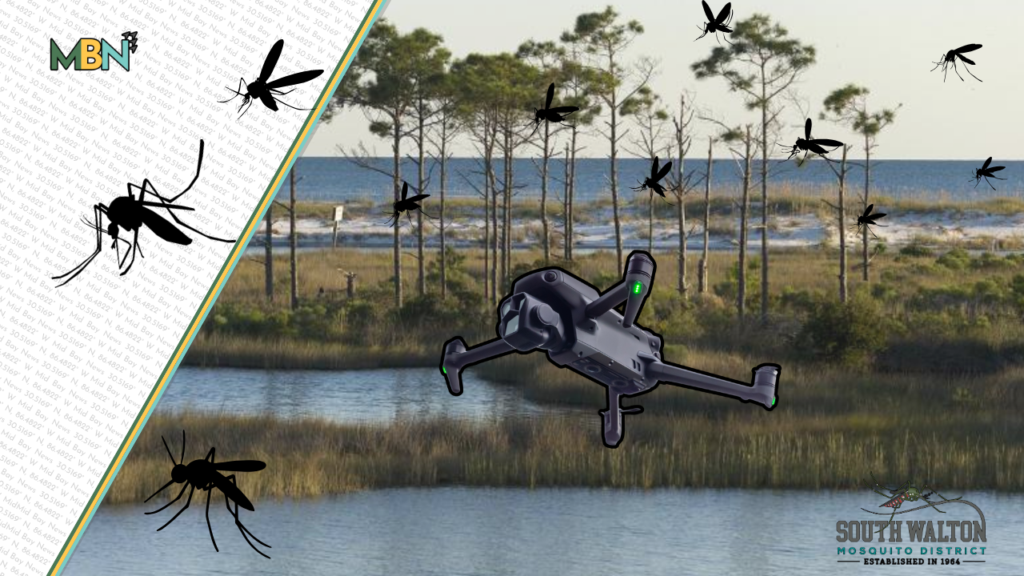
According to the district, drone-accessible treatment sites now cover nearly 600 acres, with crews treating more than 2,500 acres in 2025 using approximately 21,500 pounds of product, nearly double the acreage treated the year before.
Hays said updated mapping remains critical to the operation as rapid development continues throughout Walton County.
“Our current mapping program can’t keep up with the ongoing construction,” Hays explained. “We try to update our own maps with imagery through DroneDeploy, so that we can actually see what’s on the ground.”
The district says drone treatments are carefully calibrated to ensure products are distributed accurately without unnecessarily impacting surrounding ecosystems.
While both drone operators are FAA Part 107-licensed pilots, SWMD operates under a public-use Certificate of Authorization (COA), allowing the district to conduct government mosquito-control missions while maintaining detailed flight logs and operational oversight.
Hays said additional precautions are taken when operating near nearby military installations and controlled airspace.
“Anytime we plan to fly near Class D Airspace, I make a quick phone call to the base to ask permission before taking off,” he said.
Officials also emphasized that the drones are not used for surveillance or video recording during treatment missions, addressing concerns some residents may have about privacy.
The district says public outreach has become a major part of the program. Treatment notifications are regularly posted online and on social media so residents know when operations are scheduled in their area.
SWMD’s efforts recently earned national attention after receiving Malcolm Gladwell’s “Tipping Point Designation,” an award recognizing organizations creating major industry innovations. The honor included a $30,000 charitable donation and recognition for reducing treatment times by 75% through the use of drone technology and GPS-guided mapping systems.
District officials say the drone program is only one piece of a larger Integrated Mosquito Management strategy that also includes surveillance, source reduction, larviciding, adulticiding, and public education efforts.
For residents, officials say the program’s success may be easiest to see in what they don’t notice at all: fewer mosquitoes.
As Hays put it, “When people say they don’t have a mosquito problem, my answer is simple: ‘Well, you’re right — because we’re doing our job.’”