Florida is preparing for a rare, but not unprecedented, mid-decade redrawing of its congressional map after explosive population growth, and state lawmakers are heading back to Tallahassee for a special session to get it done.
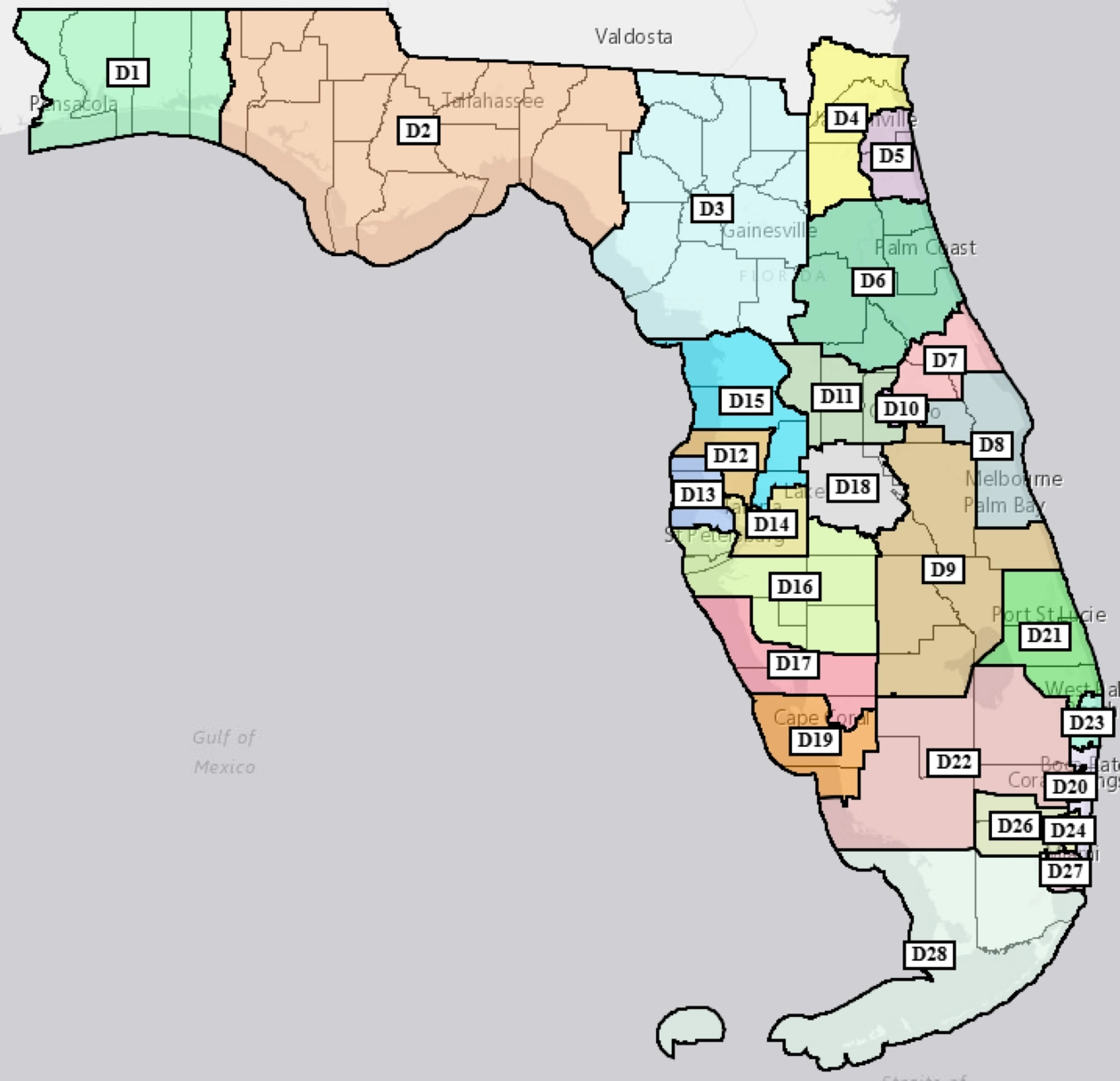
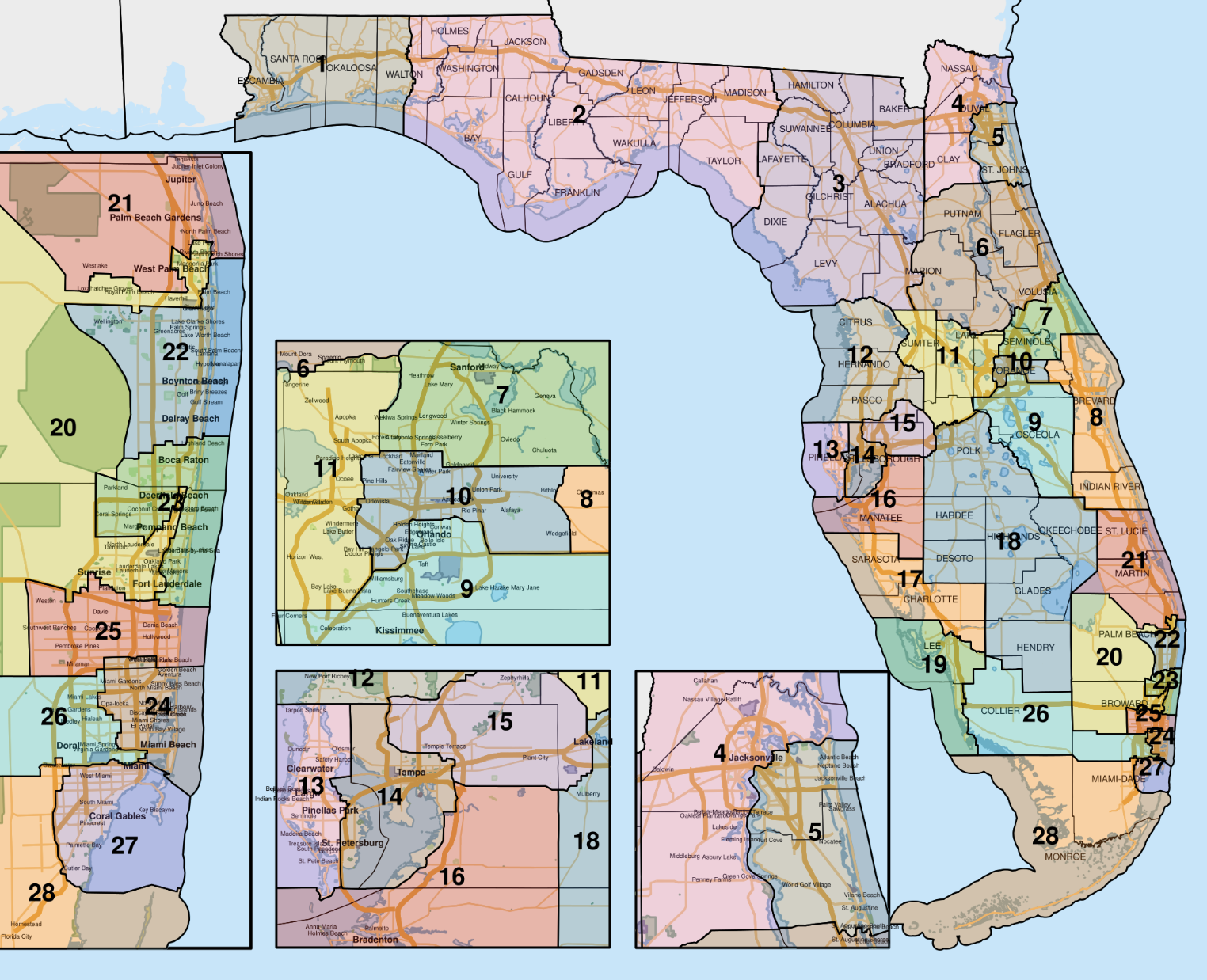
In an interview on Monday, State Sen. Don Gaetz — who represents most of Santa Rosa County and the northern part of Okaloosa County — explained that Gov. Ron DeSantis has called the Legislature back to consider a plan to rebalance the state’s U.S. House districts. Sen. Gaetz filed the bill that would redistrict the state’s House districts in the State Senate on behalf of Governor DeSantis, who proposed the redistricting effort and revealed a proposed map on Monday.
Florida is one of 15 states that have, might or are considering changes to their legislative maps in the middle of the census perioad, according to the National Conference of State Legislatures.
Why Redistrict Now?
Under the U.S. Constitution, congressional districts are supposed to have essentially equal populations to ensure the principle of “one person, one vote.” Normally, those lines are drawn once every 10 years after the census.
But Florida’s population has surged in just the last few years. The state has grown roughly 9% in five years to over 23.4 million residents. Essentially, a population the size of Nebraska moved into the Sunshine State between 2020 and 2025.
Gaetz said the governor’s argument is that these rapid, uneven influxes of residents have created imbalances in representation between districts.
“We’ve got a huge influx of new people in Florida, and as a result, we have surges of population in different parts of the state that mean that some places in the state have unequal congressional representation,” Gaetz said. “Under the US Constitution, you have to have exactly the same number of people in each congressional district in order to be able to say one person, one vote.”
Okaloosa County Democratic Party Chair Steve Norton doesn’t see it the same way as Senator Gaetz. He didn’t hold back.
“If it’s a typical De Satan ploy, the problem is that there is no need for redistricting,” Norton argued, “We haven’t had a census. And generally speaking, the trend has been to redistrict for the purpose of uh, gaining more Republican uh, seats rather than keeping it fair and among the people.”
Gaetz: Proposal Not About Partisan Advantage
Any redistricting fight in Florida tends to trigger accusations of partisan gerrymandering. Asked whether Democrats are right to see this as a move to secure more Republican seats, Gaetz pushed back.
Gaetz, who chairs the Senate Ethics and Elections Committee and is responsible for filing the governor’s bill in the Senate, said he has seen no discussion — at least publicly — of drawing lines for partisan gain.
“I’ve heard no conversation about the partisan nature of his proposal,” he said. “I read his proposal in great depth today, and there’s nothing in there about helping Republicans or hurting Democrats.”
He added that any overt attempt at partisan gerrymandering would fail in court:
“Everything in his proposal talks about making sure that everybody, no matter whether they’re a Democrat or Republican, no matter what side of what congressional line they happen to be on, will have an equal representation in Congress, otherwise it won’t pass judicial muster. There’s no way that you can redistrict for the purpose of partisan advantage and have that be acceptable under the law”.
Critics on the left side of the aisle vociferously debate this claim, saying the new maps would add four seats to the Republican side of the ledger based on recent voting trends, according to the Miami Herald. If true, this would give Republicans a 28-4 advantage in the state’s delegation to Washington, D.C.
“I’ve lived here over 50 years. I think Florida generally speaking has experienced rapid growth. There’s, there’s no known evidence in my opinion that, uh, it’s unusual or extraordinary to the point that they can’t wait till the census comes out,” Okaloosa Democratic Party Chairman Norton said, “[Republicans will] say whatever. I don’t believe most of what any of the representatives from the Republican Party tend to say because they tend to be, untruthful.”
The new map, if passed, would be in place for the 2026 election cycle, when all of Florida’s members of the U.S. House must stand for re-election.
Gaetz said it’s too early to know how the Florida delegation’s partisan balance could shift.
“There are going to be elections in 2026, and no matter where and how the lines are drawn, every member of the US House is going to have to stand for election, and some are going to be elected, and some are going to be defeated, and some are going to retire,” he said. “So I don’t know what the final makeup of the House will be”.
Florida is not alone in revisiting its districts mid-decade. Gaetz noted that seven other states are also going through mid-cycle congressional redistricting “largely for some of the same purposes,” and that Florida itself has done mid-decade redistricting four times in the past.
“This is not unusual; it’s not unprecedented. It is rare, but it is necessary if you have significant population changes,” he said.
You can see Gaetz’s full argument in his bill here.
What happens next in DeSantis and Gaetz’s Florida Congressional Redistricting Effort?
The redistricting proposal will move first through the Senate’s Rules Committee.
According to Gaetz, the process will begin with a public presentation by the governor’s team:
“Tomorrow, the governor’s representatives will appear before the Rules Committee, and they will present the plan and the reasons for the plan, the logic behind it, the discussion about population surges and the consequent inequality of representation,” Gaetz said.
From there:
The timeline is fluid.
“It could move quickly, or it could take more time,” Gaetz said. “That could be a day or two or more”.
Will Districts 1 and 2 Change?
For Northwest Florida residents in Congressional Districts 1 and 2, Gaetz said he does not expect the lines to change under the governor’s proposal.
“As I read the governor’s proposal, there is no change to congressional districts one and two, which really are Northwest Florida,” Gaetz said.
Instead, the bulk of the redistricting changes would fall on other parts of the state where population spikes have been the largest.
“The significant population influxes, the disproportionate influxes have been in other parts of the state,” Gaetz explained. “Our part of the state is growing, but we’re not growing disproportionately more than some of the parts of the state that have had greater influxes of population”.
He said the areas most likely affected are in Central and South Florida:
“As I read the governor’s proposal, it’s in the central and south part of the state,” he said.
Why So Many People Are Moving to Florida
While the pandemic played a role in the population spike, Gaetz said it’s only part of the story.
“Covid might be one of the reasons,” he said, but pointed more strongly to what he called Florida’s low-tax, business-friendly environment and its political identity.
“Many people have moved to Florida because they believe that our state is, as the governor says, the Free State of Florida, as opposed to a state where the legislature spends its time debating tax increases and transgender issues, and you know, who can play on the girls’ softball team,” Gaetz said.
In contrast, he said, Florida’s legislative debates tend to center on cutting taxes and ensuring equal representation.
“I think Florida is doing well economically. We’re doing well in attracting people, but when you attract people and when you have a booming economy, you also have the consequence of making sure that you redistrict in a way that’s fair and equitable for everybody who moves here,” he said.
We love to bring you, and all of your neighbors, the news for free – it’s a part of who we are. But just because something is free doesn’t mean it’s cheap.
Your sustaining donation of just $10 per month helps us keep the powerful accountable and make the mortgage on time. If you notice you keep coming back for more stories from us – please consider supporting our work so we can do it for the long haul (and not be homeless).
Register or login with Mid Bay News and never get another pop up on our site!