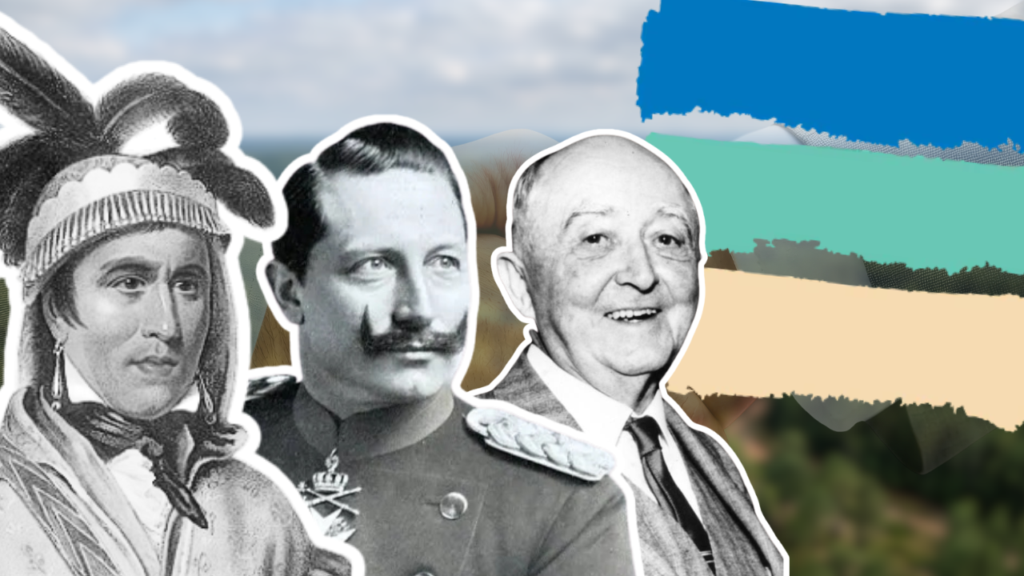
On May 11 of 1925, the DuPont fortune invested in Florida at a level seldom seen. It was on this day in 1925 that the trustee of the estate and Alfred Dupont’s brother-in-law and right-hand man, Ed Ball, scooped up thousands of acres in Northwest Florida, completing one of the Great American land deals in history. The New York Times would describe him in his obituary as “one of Florida’s most influential and controversial citizens” when he died at 93 in 1981.
But to understand how Ball got his hands on the land, we have to hop back a little further in Florida history.
After the end of the First Seminole War and the occupation of Florida by the United States, land claims, to put it lightly, got a little hairy. But thanks to a Supreme Court Ruling called Mitchel V. United States in 1835, Spanish land claims to the Forbes Company were honored and the balance of Creek lands traded to settle debts with the Forbes Company were retained by the people who’d bought the land from Forbes and Co – much of which had been sold to smaller speculators in the years between the end of the war and the Mitchel ruling in 1835. Even after the ruling – there were many property disputes over the land until as late as 1877.
RELATED: While the Mitchel case was going on, a guerrilla war was brewing in Northwest Florida
At this point, the pine-forested acres were worth very little – a couple of cents an acre at the most. Only land at the extreme northern portion of what was then known as the Forbes Land Grant, in what is now Gadsden County, had any value for farming. So, the land was little used until after the Civil War.
Attracted by low prices for yellow pine, many of the North’s lumber barons headed south to take advantage of the cheap, hard, plentiful forests that started in Walton County and went to the Apalachicola River in the East. Much of the land in Okaloosa County was a part of the Naval Preserve lands that had been set aside by the Federal Government to build the Navy’s ships in a time of war, so naturally, not many people lived there.
As the 1870s became the 1880s and 1890s, lumber companies in the Gulf South “grew from small, almost pioneer-type operations to big businesses,” Wrote Edward Keuchel in his article about the lumber companies that inhabited the area.
By 1900, Quebecois had entered the fray to make their way in the lumber industry during the winter months. Henri Bovis, a French-Canadian, would start the St. Andrew’s Lumber Company and endeavored to cut 100,000 board feet of wood per day.
Another actor, the German-American Lumber Company, would set up shop in Pensacola and soon buy out many of the other interests in the area. They would improve the processes to ship lumber around the world: packing wood so that it wouldn’t rot on long journeys, chief among their accolades. Their innovations saved them untold sums on lost cargoes. Half of the company was owned by Americans, and the other half by Germans from Hamburg. It wouldn’t be long, though, before the majority of shares ended up in the hands of the German Kaiser, or king.
That wasn’t an issue for a while, and the German-American Lumber Company made plenty of money selling its wares around the world. That is, until Archduke Franz Ferdinand was shot and killed in Sarajevo in the summer of 1914.
While the Americans and Germans would not become official enemies until 1917, suspicion quickly shrouded any German interest in the United States. A company with links to Kaiser Wilhelm, even more so. Whether true or not, claims that the German-American Lumber Company had hidden guns and pro-German literature in one of their facilities quickly unraveled the operation.
On March 23, 1918, the United States Government seized the assets of the German-American Lumber Company and sold them to finance the war. The company’s assets would end up in the hands of the West Florida Lumber Company. The German citizens who owned shares in the company would have to be compensated by a bankrupt government on the verge of communist overthrow, per the terms of the Treaty of Versailles.
Suffice it to say, they weren’t made whole.
But that wasn’t Walter Sherman’s problem. In 1919, he’d rename his business the St. Andrew’s Bay Lumber Company.
What was his problem was the utter collapse of the Florida real estate market that began on the other side of the state. Property in Florida at the beginning of the 1920s saw a massive increase in value as land speculation, driven by the railroads, spread up and down the Atlantic Coast of the Sunshine State. Several other factors, including the ease of obtaining consumer credit, the rise of the automobile as a means of getting to and from vacation destinations, and rumors that prohibition was not being enforced (somewhat true, depending on who you knew), brought many people to the state to visit or live.
But the same things that brought people to the area quickly became the state’s undoing – and financial ruin for real estate investors followed in 1925 as the bubble popped. Some scholars argue that the 1925 Florida real estate collapse began the country’s tumble toward Black Tuesday and the Great Depression.
The collapse of the Florida real estate market devastated those heavily invested as a proportion of their assets – the Robber Barons and their ilk were ready and willing to take advantage. As credit dried up and bills came due, the lumber companies of west Florida that were no longer selling at the rate they once did began to bleed cash and feel the nationwide credit crunch.
Forced to sell, the lumber companies found a more-than-willing buyer in Ed Ball, the consigliere for multimillionaire Alfred Dupont, who would give them pennies on the dollar for their land.
The DuPont Family Trust and the West Florida Lumber Company would ink the final deal on May 11, 1925.
Ed Ball would keep the land in a natural state for the rest of his considerably lengthy life. The DuPont family trust would eventually spin off the land, in partnership with Mead Paper of Michigan, into the St. Joe Paper Company. In the early-to-mid-century equivalent of putting a carwash on a piece of land to earn passive income while keeping the land ready for sale, the DuPont family trust would use the land to harvest trees and create pulp for paper.
The St. Joe Paper Company, at its zenith, owned three percent of all Florida land.
Almost sixty years after the purchase, though, the landscape of Walton County would change seismically.
A small enclave of land, surrounded by the Gulf and St. Joe’s considerable housing, remained in the hands of the grandson of an Alabama entrepreneur. The young man, Robert Davis, had a love of architecture and an idea to create a walkable small town on the Gulf Coast for middle- to working-class people. Teachers, police officers, you get the idea.
When Davis broke ground on the project, he called Seaside, plenty of people thought the idea would never work. And in a way, they were right. Seaside never became the permanent home for the normal folk. Instead of the everyman having a permanent home in the little village, vacationers from Atlanta, Birmingham, Nashville, and Dallas would rent out someone else’s home (a second home bought as an investment property). Prices, as they did in the 1920s, skyrocketed as people realized it was a solid-gold investment for their portfolios.
Soon, the old St. Joe Company land would see small subdivisions and electric success, and follow suit. Ed Ball had died in 1981, and the company’s new leader, J.C. Belin, would take the slightest tack in the new direction: luxury property sales. He’d guide the company through his term of leadership (and the Savings and Loan crisis) like his predecessor in the 1920s: the downturn meant that the cash-rich company with little debt and plenty of assets could buy up even more land at bargain basement prices. By the 1990s, Belin would give way to former Disney Executive Peter Rummel, who would completely turn the ship toward land development. He would oversee the sale of the company’s paper and cardboard manufacturing assets for nearly $400 million and prepare for a new chapter. Under the Rummel administration, the construction of communities that mimicked the homey feel of Seaside would break ground – and break sales records. Watercolor and WaterSound Beach would become household names for places to vacation in Atlanta, Louisville, Dallas, and Houston.
A good handbook on exactly what happened is The Rise and Fall of the Redneck Riviera, by Professor Harvey Jackson, III.
But none of this could have taken place without the efforts of Ed Ball and the DuPont family, which led to the first purchase of almost one million acres of land in Walton, Bay, Washington, and Calhoun Counties on May 11, 1925.
We love to bring you, and all of your neighbors, the news for free – it’s a part of who we are. But just because something is free doesn’t mean it’s cheap.
Your sustaining donation of just $10 per month helps us keep the powerful accountable and make the mortgage on time. If you notice you keep coming back for more stories from us – please consider supporting our work so we can do it for the long haul (and not be homeless).

Register or login with Mid Bay News and never get another pop up on our site!