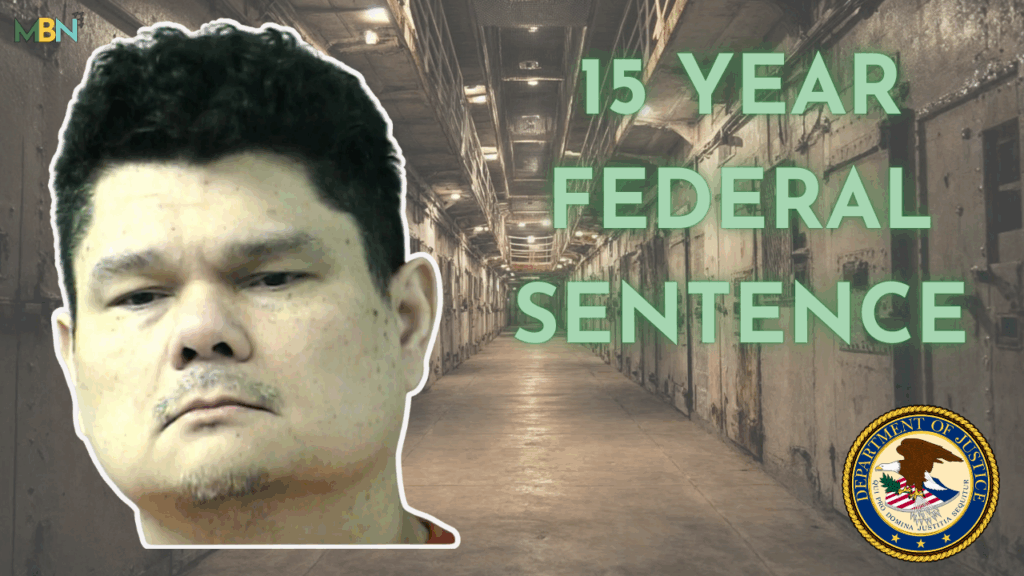
A Niceville man with a prior conviction received 15 years in federal prison after investigators found thousands of child sexual abuse files.
Federal, state, and local agencies collaborated to uncover the crimes and remove the offender from the community.
The sentence includes lifetime supervised release, restitution, and continued sex offender registration.
A Niceville man with a prior child pornography conviction has been sentenced to 15 years in federal prison after investigators uncovered thousands of images and videos depicting the sexual exploitation of children — including victims under the age of 12 — across dozens of electronic devices in his home.
John J. Schugmann, 53, received the sentence on Monday in Pensacola federal court. The U.S. Attorney’s Office for the Northern District of Florida said the case exemplifies the seriousness of online child exploitation and the high level of coordination it takes to catch offenders who attempt to hide behind digital platforms.
The investigation began in December 2024, when federal authorities detected that Schugmann was uploading child sexual abuse material to an online search engine — an activity that triggered alerts for law enforcement. Court documents show that these uploads weren’t isolated incidents but part of an ongoing pattern of online activity.
Federal agents and Okaloosa County Sheriff’s Office investigators obtained a warrant to search Schugmann’s residence. During the search, Schugmann admitted to both viewing and downloading child pornography. Officials seized dozens of electronic devices — far more than what is typical in similar cases — including computers, external hard drives, tablets, and phones.
A forensic review of those devices revealed thousands of illegal images and videos. Prosecutors say the volume and nature of the content showed a long-term pattern of exploitation and interest in extremely young victims. Some files pointed to victims “well under 12 years of age,” according to investigators.
Schugmann was not new to law enforcement. He was already a registered sex offender and had spent time in Florida State Prison for a prior child pornography conviction. Prosecutors noted this history as a significant factor in requesting a lengthy sentence, arguing that he continued engaging in illegal conduct despite prior penalties and mandated supervision.
U.S. Attorney John P. Heekin said the 15-year sentence should stand as a clear message to others engaging in similar crimes.
“This substantial prison sentence should serve as a warning to others who prey upon and exploit our children,” Heekin said. “My office will aggressively prosecute such crimes to the fullest extent of the law.”
He credited the vigilance of federal and local partners who monitor online activity and track down those trafficking child sexual abuse material.
Homeland Security Investigations (HSI) Assistant Special Agent in Charge Nicholas G. Ingegno said Schugmann’s case illustrates how online viewing and distribution of child exploitation material directly harms real children.
“Crimes committed behind a screen cause real-world harm,” Ingegno said. “This outcome demonstrates our commitment to protecting the most vulnerable and pursuing those who use the digital space to abuse our children.”
Okaloosa County Sheriff Eric Aden, whose deputies assisted with the investigation, said the successful prosecution is an example of how agency partnerships help keep offenders from harming the community.
“Every successful outcome like this one is a clear reminder that collaboration is our greatest tool in the fight against those who exploit and harm children,” Aden said.
In addition to the 15-year prison term, Schugmann was sentenced to lifetime supervised release — one of the most stringent forms of federal monitoring available. Lifetime supervision means federal officials will track where he lives, works, and accesses the internet for the rest of his life.
If he violates any condition of his release, he could be sent back to prison.
Schugmann must also continue to register as a sex offender and was ordered to pay restitution to victims whose images were found in his collection.
The case falls under Project Safe Childhood, a nationwide Justice Department initiative launched in 2006 to identify, investigate, and prosecute child predators operating online. The program brings together federal, state, and local agencies to share information, track digital evidence, and rescue victims.
The case was prosecuted by Assistant U.S. Attorney David L. Goldberg.
Suspected child exploitation can be reported to the National Center for Missing & Exploited Children’s CyberTipline, which serves as the nation’s centralized system for collecting and reviewing reports of child sexual exploitation. Reports can be submitted at https://report.cybertip.org/.
For more information about Project Safe Childhood, visit www.projectsafechildhood.gov.
Register or login with Mid Bay News and never get another pop up on our site!