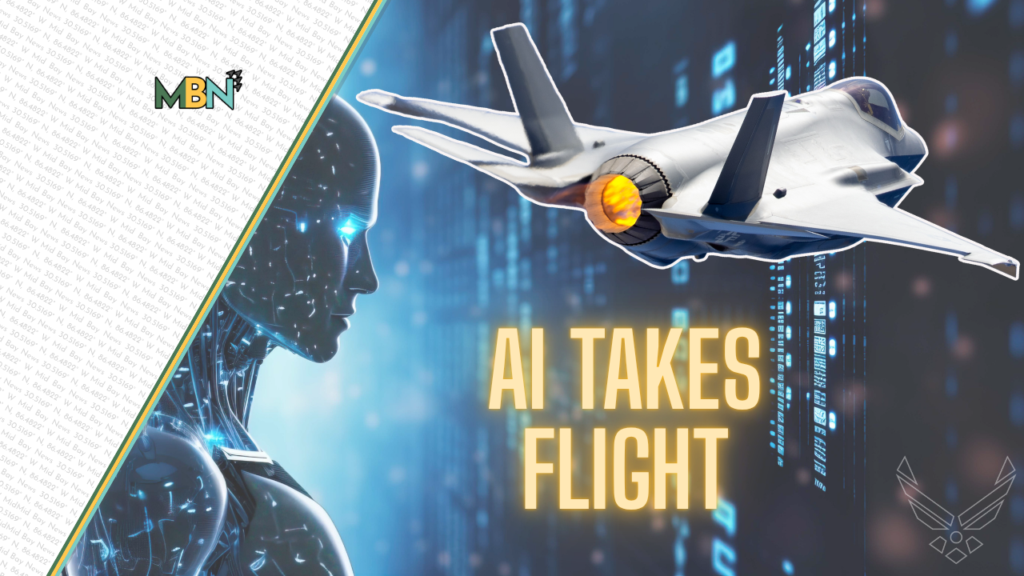
The tool uses generative AI to assist with drafting test plans, hazard analyses, and evaluation reports, tasks that traditionally required extensive manual effort.
“The AI Flight Test Assistant is a cloud-based tool that uses generative AI to augment labor-intensive test and evaluation processes,” said Jordan Conner, an AI implementation lead and one of the developers behind AFTA.
What started as a document generator has evolved into a broader workflow platform. Engineers can now build custom, no-code AI systems tailored to their specific mission needs, streamlining repetitive processes across teams.
The time savings are significant.
In one case, a task that previously took more than 20 hours was reduced to less than two hours with just minutes of human input. Another tool built using AFTA can generate complex cost estimates in under a minute, work that once took multiple people several hours.
Officials say those efficiencies could have a major impact on how quickly new technologies move from testing to real-world use.
“Speed matters,” said Maj. Gen. Scott Cain, commander of the Air Force Test Center. “Our ability to test, learn, and adapt faster than potential adversaries allows us to deliver credible capability to the warfighter.”
More than 800 users across the Department of the Air Force are already experimenting with AFTA, with dozens of organizations building custom workflows.
Despite the rapid growth, developers stress the technology is designed to assist, not replace, engineers.
“AI will get you to a strong first draft,” Conner said. “But humans are always in the loop.”
Officials say that balance is critical, especially in an environment where precision, safety, and accountability are non-negotiable.
As the military continues to explore artificial intelligence, tools like AFTA are emerging as a way to speed up innovation without sacrificing the rigor required to keep missions safe and effective.