
Editor’s Note: Northwest Florida State College recently received a $3 million state grant to establish a Maritime Fabrication Training Center in Niceville—in the heart of one of the nation’s most heavily aerospace- and defense-oriented regions. This is the first in a series of articles exploring a simple question: Why maritime here? The series will examine how Northwest Florida’s military heritage, workforce, colleges and universities, ports, manufacturers, and emerging technologies could position the region to contribute to America’s maritime industrial base and the need for greater surge capacity.
This is the second in a series of articles about manufacturing expansion in the maritime industry coming to the Emerald Coast.
An old idea behind some of today’s most advanced systems
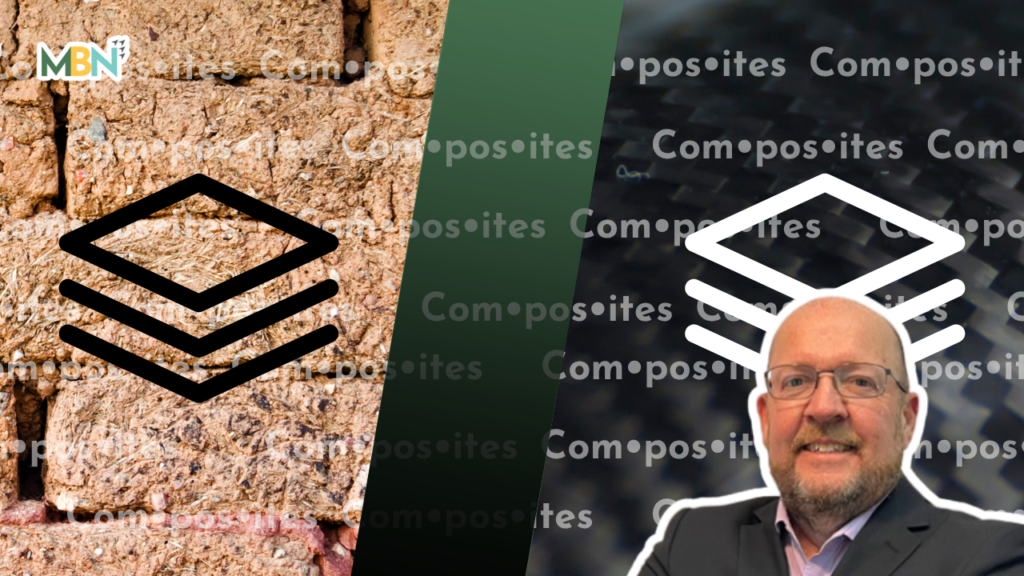
Thousands of years ago, builders learned that mud became stronger when straw was mixed into it. The mud bound the material together. The straw helped it resist cracking. Neither ingredient alone performed as well as the combination.
The Science of Composites
That is the basic idea behind today’s advanced composites: two or more materials combined so the finished material performs better than its individual parts. In modern manufacturing, the explanation can often be reduced to three elements: fiber, resin, and process.
The fiber provides reinforcement. Fiberglass is economical and versatile. Carbon fiber offers exceptional strength and stiffness at low weight. Aramid fibers can provide impact resistance. Resin surrounds and binds those fibers, transfers loads, and helps protect the finished part. The manufacturing process—such as infusion, resin transfer molding or compression molding—determines how those ingredients become a
consistent, repeatable product.
Composites are not a universal replacement for steel or aluminum. Modern aircraft, vehicles and vessels usually combine advanced metals, composites, electronics and other materials. Engineers select each material according to weight, strength, corrosion, temperature, cost, repairability and mission requirements.
Why It Matters for Northwest Florida
What makes composites important to Northwest Florida is that their manufacturing knowledge travels. Skills developed for aircraft structures can apply to radar domes. Experience producing large wind-energy components can inform marine structures. Knowledge of molds, resins, vacuum systems, finishing, assembly, inspection and quality control can support defense, transportation and autonomous maritime products.
That transfer is already visible in Pensacola. Blue Wind Technology has completed approximately 4,000 wind-energy nacelles through molding, assembly and delivery. Its wholly owned subsidiary, MCS Manufacturing, is applying composite manufacturing, tooling, CNC, assembly, finishing and testing capabilities to non-wind markets.
The Challenge of Tooling
Tooling deserves particular attention because it is one of the least visible—and most consequential—parts of advanced manufacturing. Before a manufacturer can repeatedly produce a complex composite or metal structure, someone often has to design and build the mold, pattern, fixture, die or other production tooling that makes repeatable manufacturing possible.
That capability has become a significant American industrial challenge. The United States retains world-class toolmakers, but domestic tooling and machine-tool capacity has eroded over decades as skilled workers retired, companies disappeared or consolidated, and more production moved overseas. China moved in the opposite direction, investing heavily in machine tools, manufacturing infrastructure and the workforce needed to turn designs into production.
The consequence is not simply a difference in labor costs. It is a difference in industrial capacity—and often in lead time.
A manufacturer may have a customer, an approved design, raw materials and factory space, but if the required production tooling takes months, and often years, to obtain, production still cannot begin. For national defense, that becomes more than an economic problem. A country that cannot rapidly create tooling cannot rapidly expand production.
That is what makes the advanced tooling capability already operating in Northwest Florida particularly relevant. MCS Manufacturing can design, machine, build and use production tooling for advanced composite manufacturing. The region is not starting with a theoretical plan to someday develop this knowledge; pieces of the capability are already here.
That experience does not mean a wind component—or the tooling used to manufacture it—automatically qualifies for a marine, aerospace or defense application. Every product must meet its own engineering, material, qualification and customer requirements. But the underlying capability matters: a workforce that understands molds, tooling, composite processes, CNC machining, inspection, finishing and repeatable production knows how to help turn an engineering design into a manufacturable product.
Building Regional Capacity
This is also why regional education matters. Gulf Coast State College already offers an established Composite Fabrication and Testing certificate, giving students a focused pathway into composite manufacturing skills.
Northwest Florida State College is taking a somewhat different approach through its new Maritime Fabrication Training Center, where composite fabrication and testing will be paired with hands-on instruction in metal fabrication and industrial pipefitting. Together, the programs demonstrate how Northwest Florida can build complementary skills useful across aerospace, defense, energy, transportation and maritime manufacturing rather than training workers for only one employer or one product.
The larger lesson is simple. Industries that look unrelated may depend on the same materials, tooling, processes and people. Northwest Florida does not have to create those capabilities from scratch. The opportunity is to expand what already exists, connect it and qualify it for new markets.
The Bigger Question
But knowing how to build something is very different from being able to build enough of it when it is suddenly needed.
Consider one comparison: China’s enormous commercial shipbuilding industry produces roughly 1,000 vessels a year. The United States produces only a handful – maybe at best 5 per year.
That gap raises a much bigger question than composites—or even ships.
What happens if America suddenly needs more than it can build?
More about the Author
Henry Kelley is the co-founder of MCS Manufacturing and Blue Wind Technology, a Pensacola-based company specializing in developing and manufacturing advanced composites for the wind energy sector.
He served as a field artillery officer in the First Gulf War and was awarded a Bronze Star. Kelley has been involved in Northwest Florida politics for the last two decades. He’s the Vice President of the Pensacola Propeller Club.
If you want to write an opinion piece for Mid Bay News, head to midbaynews.com/opinion.