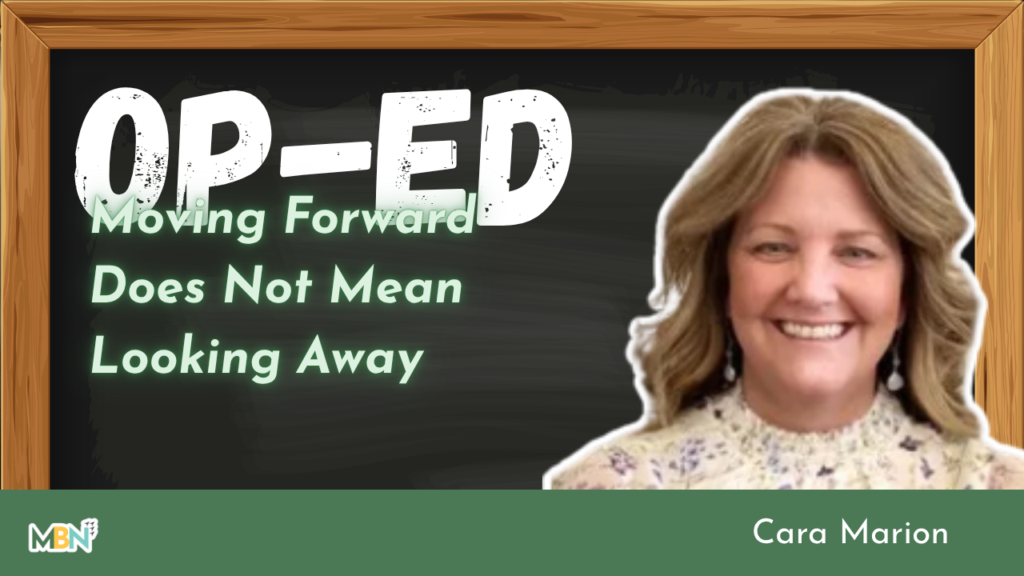

Jonathan Tallman recently called on our community to put the school board election behind us and “move forward.” I agree that our community should move forward.
Where we differ is on what moving forward requires.
Moving forward does not mean abandoning unanswered questions. It does not mean treating an election as a referendum on every action of the Okaloosa County School Board or Superintendent Marcus Chambers. And it should not mean characterizing documented concerns raised by citizens or journalists as “rumors, innuendo, and unsubstantiated claims” merely because those concerns are uncomfortable.
Accountability is not division.
Tallman says we all want responsible leadership, transparency and accountability. I agree. But those words have meaning.
An Election Is Not an Acquittal
Tallman writes that “our community has spoken” and that voters decided the direction they want our school district to take (Tallman, 2026).
The election results deserve respect. But they should not be given a meaning they cannot reasonably bear.
According to Florida election data, only 21.87% of Okaloosa County’s registered voters participated in the August 18 primary election (Florida Division of Elections, 2026). Put another way, nearly four out of every five registered voters did not cast a ballot.
More importantly, Superintendent Marcus Chambers was not on the ballot.
Voters therefore were not deciding whether they approved of Chambers’ conduct, the District’s handling of particular investigations, the Board’s oversight of the superintendent, public-comment restrictions, public-record practices, or other specific matters citizens have raised.
An election does not erase public records, and winning an election does not place government beyond scrutiny.
These Questions Did Not Come From Rumor
My concerns did not begin with campaign rhetoric. They arose from records I obtained and reviewed.
Those records have led me to question how certain allegations involving District employees and administrators were investigated; whether all relevant witnesses were interviewed; whether credibility conflicts were adequately assessed; whether implicated policies were analyzed; whether matters involving licensed educators received appropriate professional-practices review; what information reached School Board members; and whether investigative and disciplinary standards have been applied consistently across different levels of District employment.
These are especially important questions because OCSD was operating under a settlement agreement with the U.S. Department of Justice from December 2022 until DOJ concluded its monitoring in December 2025.
The agreement arose after DOJ concluded that the District violated Title II of the Americans with Disabilities Act in its response to known physical and verbal abuse and improper restraint and seclusion of students with disabilities (U.S. Department of Justice, 2022a).
The settlement required OCSD to improve its complaint procedures and internal investigations.
Paragraph 7.B.1.a required District investigations to include:
“adequate fact-finding and analysis to substantiate the investigator’s findings” (U.S. Department of Justice, 2022b, para. 7).
The same provision required investigators to interview relevant individuals, appropriately assess credibility, and analyze whether the alleged misconduct violated implicated District policies (U.S. Department of Justice, 2022b).
Those are meaningful investigative standards.
Therefore, when citizens reviewing investigative files identify relevant witnesses who appear not to have been interviewed, unresolved credibility issues, policies that do not appear to have been analyzed, or allegations for which they cannot locate a corresponding District-level investigation, asking whether the process met those standards is not an attack.
It is a legitimate accountability question.
DOJ Cannot Evaluate Information It Never Receives
Accuracy requires acknowledging another important fact: on December 3, 2025, DOJ concluded its monitoring and stated that OCSD had complied with the agreement (U.S. Department of Justice, 2025).
But that does not end every legitimate question about what DOJ knew during the monitoring period.
The settlement itself established a reporting process in which the District provided information and documentation to DOJ. Paragraph 9 required OCSD to submit progress reports twice each year containing specified information regarding complaints, investigations, restraint incidents and other compliance matters. Paragraph 10 authorized DOJ to request additional records, visit schools, attend trainings and undertake other activities it considered necessary to evaluate compliance (U.S. Department of Justice, 2022b).
That structure raises a simple but important question:
What happens if an incident is never investigated, never properly documented, or never reported in a manner that brings it to DOJ’s attention?
DOJ cannot independently evaluate an investigation that was never conducted. Nor can it assess information that was never provided to it.
That does not prove OCSD withheld information from DOJ, and I am not claiming that it does.
It does mean that identifying records or incidents that may not have been incorporated into the District’s investigative and reporting processes warrants asking whether DOJ was aware of them.
The appropriate response is not a Facebook argument. It is to provide the records and identified discrepancies to the appropriate outside authorities and allow them to determine whether further review is warranted.
Public Comment Is Supposed to Include Criticism
Accountability also requires examining how citizens are treated when they attempt to raise concerns before their elected School Board.
My family has experienced this firsthand.
Since 2022, my husband, my children and I have had microphones muted during our allotted speaking time. We have encountered restrictions on discussing the conduct of educators or School Board members. Most recently at the May 11, 2026 School Board meeting, then-Chair Linda Evanchyk told my husband:
“I will not let you talk about an educator.”
That should concern people regardless of whether they agree with what a speaker intends to say.
Florida law provides members of the public a reasonable opportunity to be heard on propositions before covered public boards while allowing boards to maintain order and decorum (Fla. Stat. § 286.0114, 2025).
The First Amendment imposes additional constitutional limits.
In Moms for Liberty-Brevard County, FL v. Brevard Public Schools (2024), the U.S. Court of Appeals for the Eleventh Circuit, which governs federal constitutional law in Florida, considered restrictions on speech during school board meetings. The court concluded that several challenged restrictions by Brevard School Board were unconstitutional, including a prohibition it found viewpoint discriminatory.
The lesson is important.
A government body may enforce reasonable rules governing time, place, manner and decorum. But criticism cannot receive less constitutional protection simply because it is criticism.
Otherwise, public comment ceases to function as meaningful public participation.
If citizens may praise an educator but cannot criticize one, praise a board member but cannot discuss that member’s conduct, or applaud District leadership while critical speech is silenced as inappropriate, the government is no longer simply maintaining decorum. Serious First Amendment questions arise.
Transparency Also Applies to the Board
There are legitimate questions about the School Board’s decision to retain outside counsel for matters that ultimately included investigations involving District leadership.
Records I obtained indicate that the public-facing description concerned “employment law matters,” while outside counsel ultimately produced investigative reports concerning the superintendent and other District leadership.
Records also raise questions about communications with individual Board members before the public vote.
Florida’s Government-in-the-Sunshine Law requires covered board meetings at which official acts are taken to be public and requires reasonable notice (Fla. Stat. § 286.011, 2025).
I am not asking readers to accept my conclusion about whether particular communications constituted a Sunshine Law violation. That determination belongs to the appropriate legal authorities.
I am saying the circumstances warrant scrutiny.
There is an important difference between accusing someone of a crime and asking whether documented governmental conduct complied with Florida’s transparency requirements.
Civility Must Work Both Ways
Some officials and their supporters have called for civility while simultaneously using social media to defend themselves and challenge their critics.
Superintendent Chambers has publicly defended his record and disputed allegations made against him. School Board officials have amplified messages defending District leadership.
They have every right to do so.
So do citizens who disagree with them.
Civility cannot become a one-way rule under which public officials may defend themselves, dispute allegations and criticize their critics, while citizens responding with records are accused of creating division.
Civility does not require silence.
Neither does unity.
Journalism Is Supposed to Ask Uncomfortable Questions
Tallman’s decision to specifically call out Mid Bay News deserves consideration as well.
A local news organization examining public records, asking questions of elected officials and reporting information that government officials or their supporters dispute is not inherently evidence of irresponsible journalism.
If Mid Bay News publishes a factual error, identify the statement and produce evidence demonstrating the error.
The same standard should apply to me.
If I make a factual assertion that is incorrect, show me the record that proves it.
That is productive public discourse.
But describing reporting or documented citizen concerns as “rumor” or “innuendo” does not answer the underlying records.
The best answer to a public record is another public record.
Yes, Let Us Move Forward
So yes, Mr. Tallman, let us move forward.
Let us move forward by allowing citizens to criticize their government during public meetings without unconstitutional viewpoint discrimination.
Let us require consistent investigative standards regardless of whether an allegation involves a paraprofessional, teacher, principal, District administrator or superintendent.
Let us examine whether investigations conducted during federal oversight contained the fact-finding, witness interviews, credibility assessments and policy analysis contemplated by the DOJ agreement.
Let us ensure important School Board business is conducted transparently and that the public receives meaningful notice about decisions its elected representatives are being asked to make.
Let us provide citizens the public records to which they are legally entitled.
And let us recognize that asking government to account for its actions is not an attack on our schools.
Teachers are not harmed when citizens demand ethical leadership.
Students are not harmed when journalists investigate government.
Our community is not harmed when citizens ask difficult questions.
Public institutions become stronger when their leaders can answer those questions with facts.
A primary election in which 21.87% of registered voters participated cannot reasonably be transformed into a community-wide referendum on every unresolved concern involving OCSD. And because the superintendent was not on the ballot, the election certainly was not a direct public vote on the questions surrounding his administration.
The election is over.
Oversight is not.
Democracy does not ask citizens to scrutinize government only during campaign season. It depends on citizens doing so between elections, too.
If we truly agree that Okaloosa County deserves transparency, accountability, responsible leadership and excellent schools, then scrutiny should not be feared.
It should be welcomed.
Because the way forward is not to stop asking questions.
It is to answer them.
⸻
References
Florida Division of Elections. (2026). 2026 primary election voter turnout. Florida Department of State.
Florida Legislature. (2025). Florida Statutes § 286.011: Public meetings and records; public inspection; criminal and civil penalties. Online Sunshine.
https://www.leg.state.fl.us/Statutes/index.cfm?App_mode=Display_Statute&URL=0200-0299/0286/Sections/0286.011.html
Florida Legislature. (2025). Florida Statutes § 286.0114: Public meetings; reasonable opportunity to be heard; attorney fees. Online Sunshine.
https://www.leg.state.fl.us/Statutes/index.cfm?App_mode=Display_Statute&URL=0200-0299/0286/Sections/0286.0114.html
Moms for Liberty–Brevard County, FL v. Brevard Public Schools, No. 23-10656 (11th Cir. Oct. 8, 2024).
https://media.ca11.uscourts.gov/opinions/pub/files/202310656.pdf
Tallman, J. (2026, August 20). Opinion: Tallman calls out Mid Bay News, urges community to move beyond election division. Mid Bay News.
U.S. Department of Justice. (2022a, December 21). Justice Department secures settlement with Florida school district to protect students with disabilities.
U.S. Department of Justice, Civil Rights Division. (2022b, December 20). Okaloosa County School District settlement agreement.
U.S. Department of Justice, Civil Rights Division. (2025, December 3). Okaloosa County School District—Conclusion of monitoring.