
Opinion: This commentary was submitted by James Darenkamp. The opinions expressed are those of the author and do not necessarily reflect the views of Mid Bay News.
The Hidden Cost of Going Solar: New Scorecard Shows Rural Co-ops Mislead and Penalize Members
By James Darenkamp
Across the Florida Panhandle, a troubling trend is unfolding: electric cooperatives—once trusted institutions built to serve their members—are quietly undermining rooftop solar adoption through hidden fees, lack of transparency, and closed-door decision-making. A new scorecard from Solar United Neighbors reveals just how widespread and damaging this trend has become. These co-ops are not just penalizing solar users like me; they’re eroding the very values of democracy and service they were founded on.
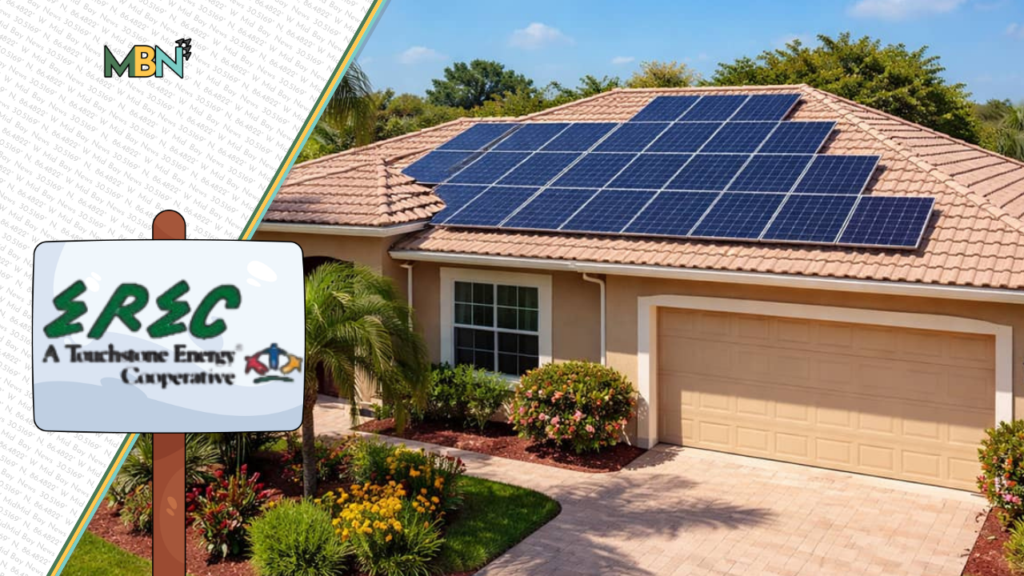
As a rural member of Escambia River Electric Cooperative (EREC), I invested in solar and battery storage not to make a political statement or avoid paying my fair share, but to protect my home and my family from routine power disruptions caused by storms, wildlife, or even car accidents. Living in a rural area means taking responsibility for resilience. When hurricanes, lightning strikes, or squirrels knock out the grid, solar and storage let me keep the lights on and stay connected.
So you can imagine my frustration—and ultimately, my deep disappointment—when I discovered that my co-op, the very institution that is supposed to serve and empower its members, began charging me a punitive monthly fee simply for owning solar. It’s called the “Solar Fixed Cost Recovery Charge,” and it adds up to nearly $60 per month on my bill. The irony? This fee was never clearly explained to me during interconnection, and even now, it lacks meaningful transparency or justification.
That experience pushed me to file a formal complaint with the Federal Energy Regulatory Commission (FERC) in 2023. I knew I might not win. But what I didn’t expect was the emotional toll the process would take. The burden of navigating federal bureaucracy, the indifference I encountered at the state and co-op level, and the isolation I felt as one voice in a rural sea of silence—it left me emotionally drained, but not silent.
What frustrates me most is not just the fee itself. It’s the broader pattern of misdirection. Our co-op’s website boasts phrases like “Go Green” and “Empowering Communities,” while in practice, it does the opposite for solar adopters. The scorecard found EREC scored under 20 out of 100 points for transparency and fairness — a failing grade by any standard. Solar members are treated like freeloaders, despite the fact that we reduce peak demand, invest in local infrastructure, and provide surplus power during key daylight hours.
Even the logic behind these fees is suspect. Co-ops claim the charges are justified because solar users don’t contribute to early morning winter peaks, usually around 7 AM on a few of the coldest days of the year. But what about the rest of the year, when solar is working hard to reduce daytime load and strain on the grid? That nuance gets lost in the push for blanket charges.
Worse still, most co-op members have no idea this is happening. Many of our neighbors are completely unaware of the Solar Fixed Cost Recovery Charge or how it might affect them if they decide to go solar. They’re being misled by utility-friendly language, and the lack of transparency makes it nearly impossible for the average member to make an informed choice.
It doesn’t have to be this way. Other co-ops, like CHELCO, don’t itemize these fees — and notably, scored the highest on the new scorecard. At 34.5 points, even CHELCO has room for improvement, but the gap between it and EREC is telling. That inconsistency alone raises serious questions about whether these charges are necessary, equitable, or merely opportunistic.
Thankfully, groups like Solar United Neighbors are stepping in with tools like the Florida Panhandle Co-op Scorecard, which evaluates local electric cooperatives on transparency, solar accessibility, and democratic governance. This kind of accountability is long overdue. And the results are sobering:
– Three of four co-ops, including EREC, scored under 20 — a failing grade.
– EREC, WFEC, and GCEC impose monthly solar penalties up to $50.
– CHELCO, the only co-op without this fee, scored highest — but still well below ideal.
I’m not writing this for sympathy. I’m writing this because I know I’m not alone. There are thousands of rural members like me who believed in the promise of solar—not just for themselves, but for their communities. We deserve better than backroom fees, misleading slogans, and hidden penalties.
Our co-ops should live up to their values: transparency, democracy, and service to their members. If they won’t, then it’s up to us to hold them accountable.
Read more at https://solarunitedneighbors.org/actions/florida-panhandle-electric-co-op-scorecard/
Opinion: The views and opinions expressed in this commentary are solely those of the author and do not necessarily reflect the views of Mid Bay News, its editors, staff, advertisers, or affiliates.
This opinion piece was written by James Darenkamp, a member of Escambia River Electric Cooperative and a rooftop solar owner who has advocated for greater transparency and fairness in electric cooperative solar policies.